QL 14 — The road is still the same, but it’s much easier to travel now!
Admin
2025-08-31
0 comments
Hello everyone, I recently made a delivery trip to Ea Knốp, Đắk Lắk via National Highway 14. And honestly, it felt much more comfortable driving on this route, because I no longer had to endure those endless lines waiting to overtake like before, although there are still a few heavy trucks that struggle on the climbs, so we wait for them to move over to one side and pass where overtaking is allowed. Back when I was still driving contract cars, I used to take this route often, but later when I switched to driving trucks, I went this way less, so now that I’ve had a chance to experience it again and notice some changes, I wanted to share them with you.
The stretch from Đồng Xoài up to Gia Nghĩa, Đắk Nông is still the same as before, with some rough sections, 60 km/h signs, residential areas, end-of-residential-area signs, and some 50 km/h sections at sharp bends. But now there are also some added 60 km/h or 40 km/h signs with supplementary plates indicating time-based speed restrictions or applying to vehicles over 7 tons and passenger vehicles with >= 16 seats. The no-overtaking signs and end-of-no-overtaking signs are still clearly marked, and the traffic police checkpoints are still in their usual fixed spots. But the special thing is that there are no longer the kind of “decoy” vehicles that drive slowly to block the cars behind; now it’s mostly just heavy trucks going a bit slowly uphill, and many drivers are considerate enough to keep to one side so the vehicles behind can pass.
The biggest change is on the mountain pass section from Gia Nghĩa to Đắk Sơn: the solid lane markings have been replaced with broken lines, and the no-overtaking signs have been removed. Only the no-overtaking signs at sharp bends remain, along with speed limits for heavy trucks and large passenger vehicles.
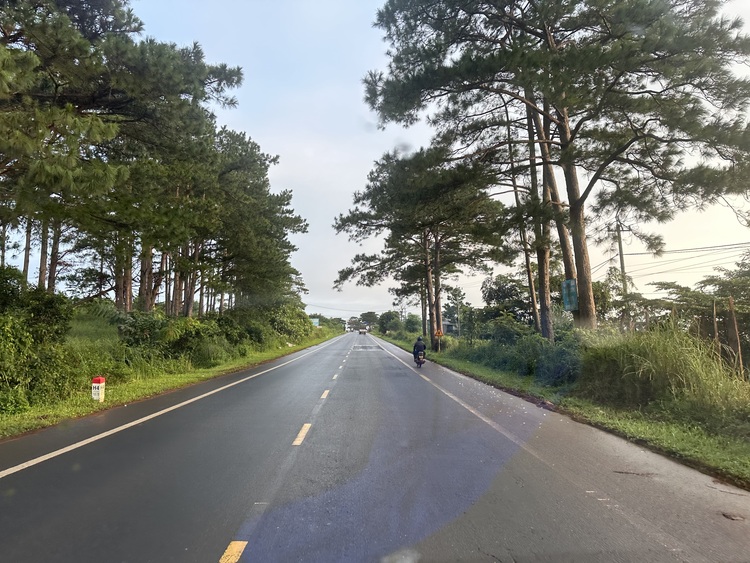
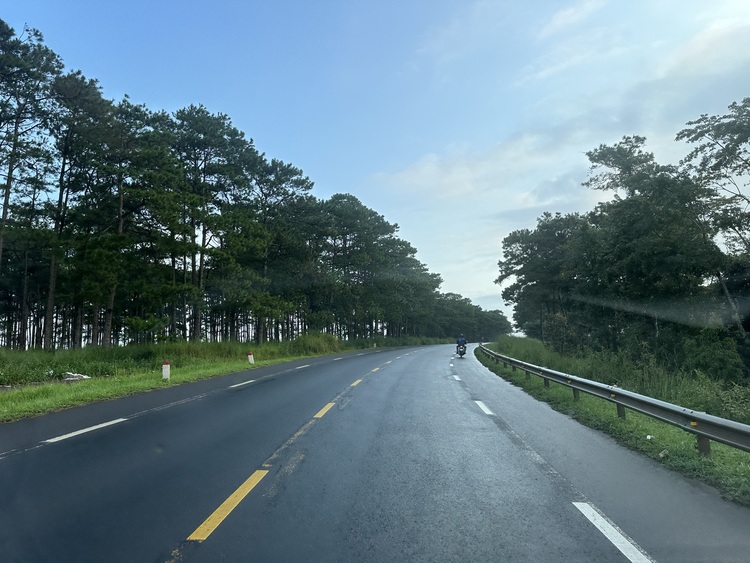
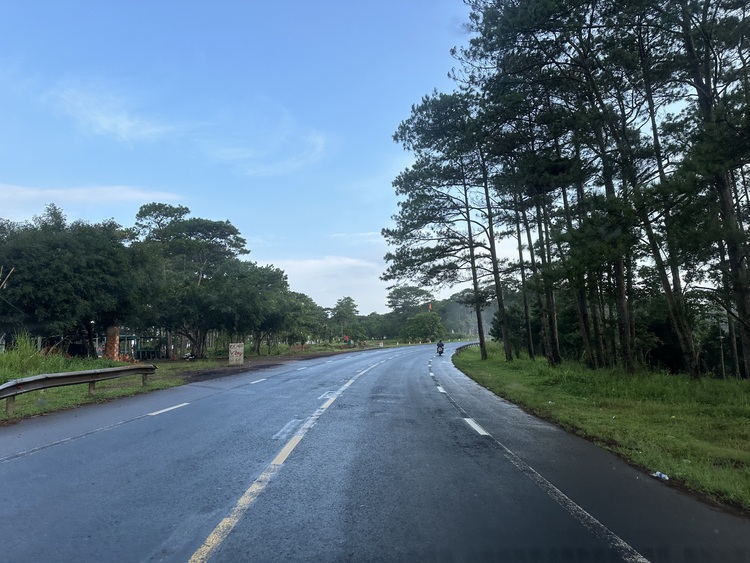
This is what it really means for the “decoy cars to be gone,” unlike before when people were set up to overtake in prohibited areas and then get fined by the traffic police.
My advice to anyone new to this route and who doesn’t yet have much driving experience is to avoid traveling on this stretch at night, from 8 p.m. to 4 a.m., because that is when there are a lot of coaches and trucks on the road, and they drive quite chaotically. So if your driving skills are still weak, you shouldn’t be mixing with that traffic flow, because collisions can easily happen if you lack the knowledge of how to yield safely. During those hours, National Highway 14 becomes as busy as a market, where the big-vehicle drivers compete with one another. When the vehicles understand each other, the yielding and overtaking are done very well and there is nothing dangerous, but if even one vehicle fails to “blend in” and keep up, it can easily lead to a chain-reaction accident. In the morning, by contrast, traffic is fairly light and open, visibility is good, the surrounding scenery is beautiful, so driving feels easier and more refreshing, and traveling is safer.
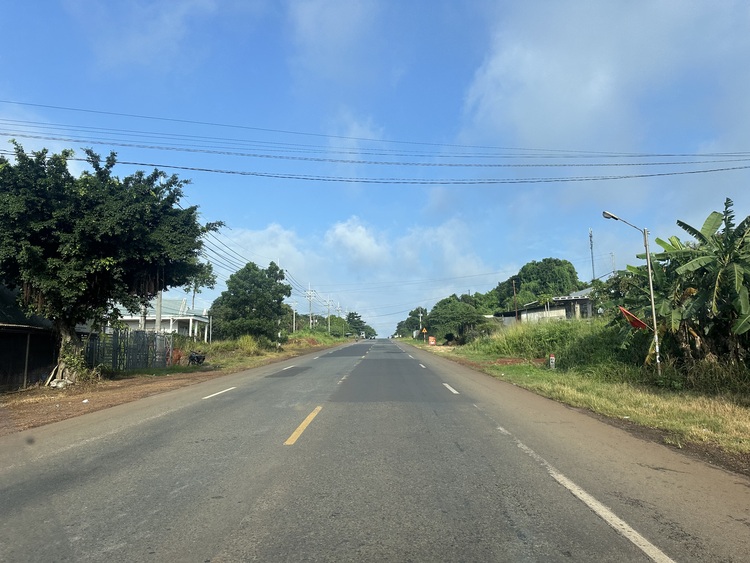
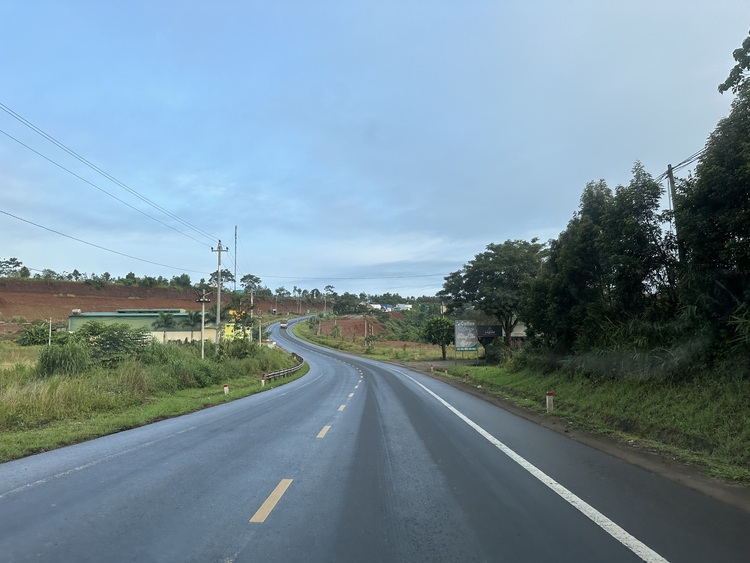
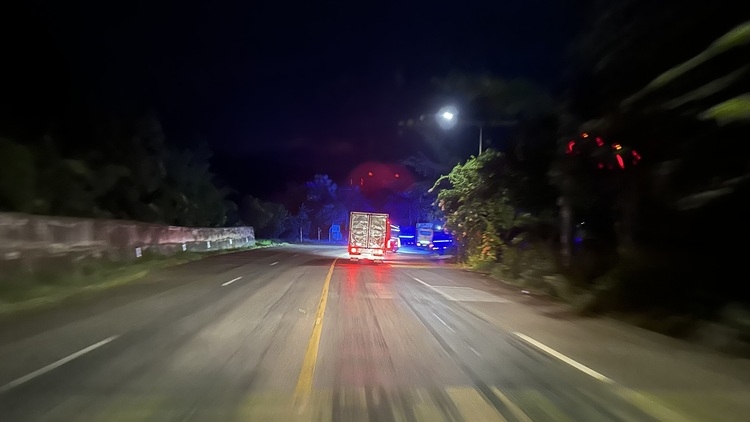
at night, it looks like this:
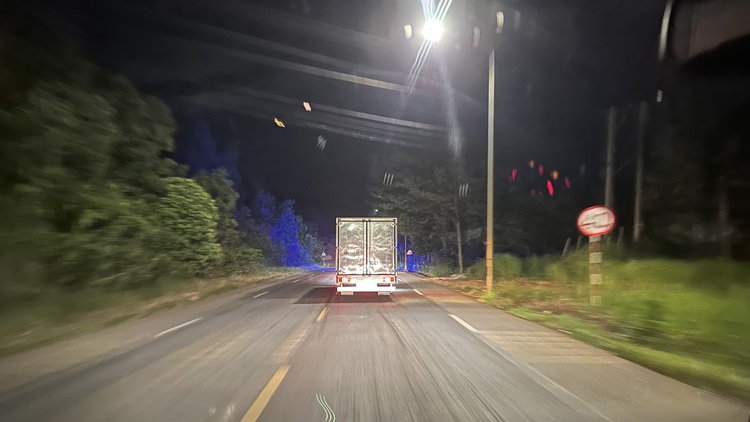
As for the traffic police checkpoints, they still set up fixed points as before, but if you pay attention, keep to the speed limit, and follow the signs, there is nothing to worry about. However, at two checkpoints I noticed many vehicles automatically pulling over (coaches and trucks) to deal with the traffic police, but I didn’t. I signaled, moved around the stopped vehicles, and drove past those two checkpoints under the officers’ puzzled looks, like, “Huh, what’s with this guy?” That’s just how I am: if I’ve done something wrong or if it’s an administrative inspection, then they should clearly signal me so I know. It doesn’t mean I’m obliged to stop the vehicle like that.
In conclusion, what I like most is the removal of the solid lines, which makes overtaking more comfortable and safer, avoids congestion on uphill sections, and eases the mental stress drivers used to feel. It also shortens travel time and reduces fatigue and pressure on drivers. That way, there will no longer be cases of people being set up for traffic violations, and people will gradually lose their fear of traveling on National Highway 14, helping promote tourism and economic development in the Central Highlands. Now I just hope the province will direct repairs to the worn or damaged road sections, or soon complete the expressway so people can travel more smoothly and safely.
The stretch from Đồng Xoài up to Gia Nghĩa, Đắk Nông is still the same as before, with some rough sections, 60 km/h signs, residential areas, end-of-residential-area signs, and some 50 km/h sections at sharp bends. But now there are also some added 60 km/h or 40 km/h signs with supplementary plates indicating time-based speed restrictions or applying to vehicles over 7 tons and passenger vehicles with >= 16 seats. The no-overtaking signs and end-of-no-overtaking signs are still clearly marked, and the traffic police checkpoints are still in their usual fixed spots. But the special thing is that there are no longer the kind of “decoy” vehicles that drive slowly to block the cars behind; now it’s mostly just heavy trucks going a bit slowly uphill, and many drivers are considerate enough to keep to one side so the vehicles behind can pass.
The biggest change is on the mountain pass section from Gia Nghĩa to Đắk Sơn: the solid lane markings have been replaced with broken lines, and the no-overtaking signs have been removed. Only the no-overtaking signs at sharp bends remain, along with speed limits for heavy trucks and large passenger vehicles.
This is what it really means for the “decoy cars to be gone,” unlike before when people were set up to overtake in prohibited areas and then get fined by the traffic police.
My advice to anyone new to this route and who doesn’t yet have much driving experience is to avoid traveling on this stretch at night, from 8 p.m. to 4 a.m., because that is when there are a lot of coaches and trucks on the road, and they drive quite chaotically. So if your driving skills are still weak, you shouldn’t be mixing with that traffic flow, because collisions can easily happen if you lack the knowledge of how to yield safely. During those hours, National Highway 14 becomes as busy as a market, where the big-vehicle drivers compete with one another. When the vehicles understand each other, the yielding and overtaking are done very well and there is nothing dangerous, but if even one vehicle fails to “blend in” and keep up, it can easily lead to a chain-reaction accident. In the morning, by contrast, traffic is fairly light and open, visibility is good, the surrounding scenery is beautiful, so driving feels easier and more refreshing, and traveling is safer.
at night, it looks like this:
As for the traffic police checkpoints, they still set up fixed points as before, but if you pay attention, keep to the speed limit, and follow the signs, there is nothing to worry about. However, at two checkpoints I noticed many vehicles automatically pulling over (coaches and trucks) to deal with the traffic police, but I didn’t. I signaled, moved around the stopped vehicles, and drove past those two checkpoints under the officers’ puzzled looks, like, “Huh, what’s with this guy?” That’s just how I am: if I’ve done something wrong or if it’s an administrative inspection, then they should clearly signal me so I know. It doesn’t mean I’m obliged to stop the vehicle like that.
In conclusion, what I like most is the removal of the solid lines, which makes overtaking more comfortable and safer, avoids congestion on uphill sections, and eases the mental stress drivers used to feel. It also shortens travel time and reduces fatigue and pressure on drivers. That way, there will no longer be cases of people being set up for traffic violations, and people will gradually lose their fear of traveling on National Highway 14, helping promote tourism and economic development in the Central Highlands. Now I just hope the province will direct repairs to the worn or damaged road sections, or soon complete the expressway so people can travel more smoothly and safely.

Share:
Copy link