Trump’s Two Options in the Iran War
President Trump appears to be pursuing two options with Iran at once, ready to negotiate while still leaving open the possibility of stepping up attacks on the country.
US President Donald Trump on March 26 announced news that brought a sense of relief to global public opinion, saying he had "postponed plans to destroy their power plants within 10 days, until 8 p.m. on April 6" at Iran's request and that "talks are ongoing."
But immediately afterward, the Wall Street Journal, citing anonymous officials at the US Department of Defense, reported that about 10,000 infantry and armored troops were being sent to the Middle East to reinforce forces already in place.
On March 23, Trump also said the US and Iran had held "very good and effective" exchanges aimed at easing tensions. On March 24, he further declared that Iran had given the US a "very big gift" related to oil and gas, and that Washington believed it was negotiating with "the right people."
A day later, the White House both urged Iran to accept a deal and threatened to "strike harshly" if Tehran refused, adding to the ambiguity over Trump's true intentions.
Observers say Trump's recent messages show he is increasingly interested in finding an exit from the fighting between the US, Israel and Iran, which has lasted nearly a month. However, his contradictory statements suggest the US president is facing two options and is still unsure which approach will work: escalating the conflict further or pushing for a peace deal.

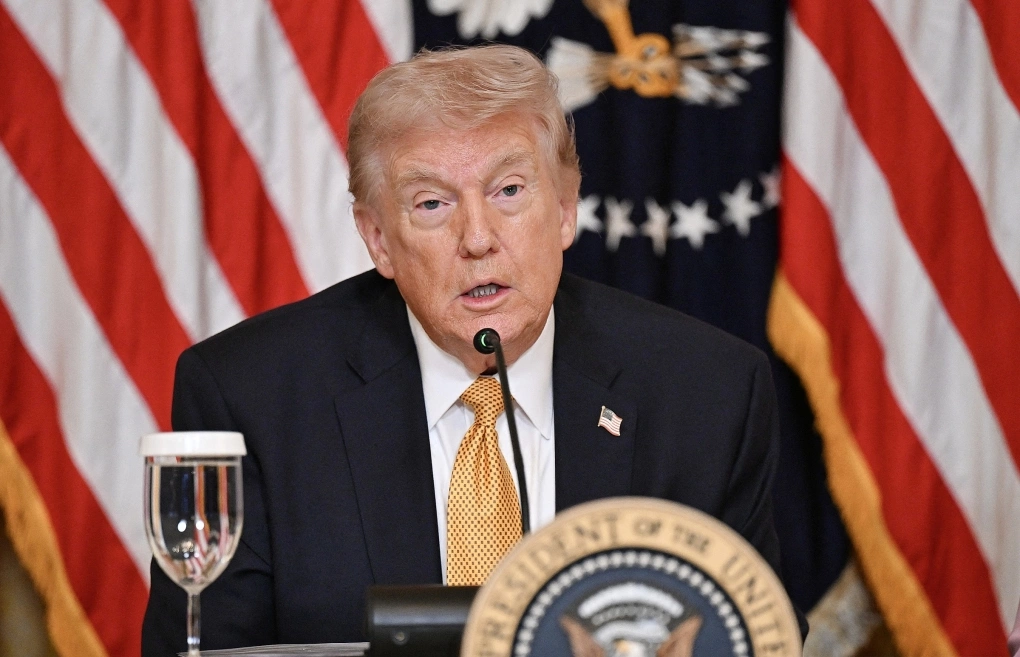
President Donald Trump speaks in Memphis, Tennessee, on March 23. Photo: AP
Pushing a ceasefire plan
Middle East envoy Steve Witkoff confirmed that Washington had sent Tehran a "list of actions" containing 15 points through Pakistani officials. Witkoff said there were "strong indications" that Tehran was ready to negotiate.
The list put forward by the US covers a range of issues, including sanctions relief, civilian nuclear cooperation, scaling back Iran's nuclear program, oversight by the International Atomic Energy Agency, demands to limit Iran's missile program, and the movement of ships through the Strait of Hormuz.
The proposal is seen as quite similar to negotiating frameworks that Witkoff and Jared Kushner, Trump's son-in-law, previously used in peace talks on Gaza and Ukraine. Those plans also included numerous specific points and were gradually adjusted as negotiations progressed. Witkoff and Kushner are said to be leading the negotiating effort with Iran.
When the list was leaked to the media, Middle East experts warned that such "maximalist" demands would be immediately rejected by Tehran. Iran is said to remain wary of US reconciliation efforts, having been attacked twice in the middle of negotiations in June 2025 and again now.
That is exactly what happened. A few hours after Pakistani officials delivered the US list to Iran, leaders in Tehran flatly rejected it, insisting that any ceasefire would be implemented only according to terms and a timeline set by Iran.
"Iran will end the war when we decide and when our own conditions are met," Iranian state media quoted a senior official as saying, describing the proposals from the US side as "outrageous." Iran also said it had no plan to reopen the Strait of Hormuz to Western ships allied with the US.
The official also laid out Iran's own five conditions for a ceasefire, including a complete end to "acts of aggression and assassinations," as well as the establishment of specific mechanisms to ensure that war against Iran does not happen again.
Iran is demanding guarantees on compensation payments, clear remediation of war damage, an end to confrontation on all fronts, including with all of its proxy forces in the region, and guarantees that Tehran can exercise sovereignty over the Strait of Hormuz and that its legal rights over the strait are recognized.
Tehran's position suggests it believes it is controlling the course of the war at least as much as, if not more than, Washington, despite Trump's assertion that the US has seized the initiative.
Iran's response has raised doubts about whether the two countries are truly engaged in serious diplomatic talks, and how long Trump can persist with the diplomatic path when the demands put forward by both sides are now so far apart.
Escalating the conflict
Reports that the US is continuing to send more ground forces to the Middle East have raised concerns among analysts that Trump may see the military option as a parallel track to diplomacy.
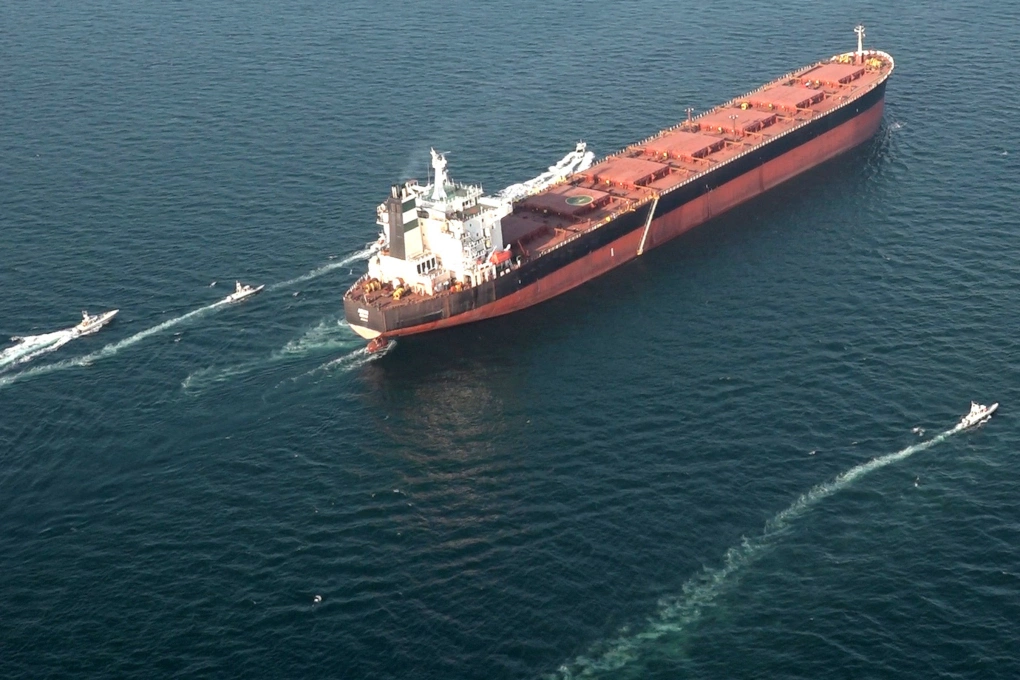
Pressure is mounting on Trump because the US still has no solution to ensure security in the Strait of Hormuz, through which 20% of the world's oil and gas supply passes. Iran has blockaded the area and threatened to attack ships linked to the US, Israel and their allies.
Instability in the Middle East and the paralysis of the Strait of Hormuz have sent energy prices soaring. Trump's calls on NATO allies and other partners to send forces to reopen the strait have so far failed to produce a viable solution.
"President Trump's problem lies in the Strait of Hormuz. If he continues to leave that area in Iran's hands, it will be very difficult to declare victory," said Stephen Hadley, national security adviser to President George W. Bush. This appears to be why Trump is still keeping the military option open.
The US had previously sent two amphibious groups carrying about 4,500 Marines to the Middle East. On March 24, US media, citing sources, reported that the Pentagon was preparing to deploy another 1,000 paratroopers from the 82nd Airborne Division to the Middle East in the coming days.
With these moves, about 15,500 US ground combat troops will be reinforced in the area near Iran this week or early next week. Military experts say these forces will most likely focus on reopening the Strait of Hormuz, with the most widely discussed scenario being a US landing to seize Kharg Island, Iran's oil export gateway.
Kharg Island has an area of 20 sq km in the Persian Gulf, about 25 km off Iran's coast and more than 480 km from Hormuz. Facilities on Kharg have a processing capacity of 7 million barrels of oil per day, and about 90% of Iran's crude oil exports pass through the island.
With Iran's economy heavily dependent on energy exports, Kharg is a vital lifeline for the country. Therefore, if it can control the island, Washington would gain additional leverage to force Tehran to reopen Hormuz.
"Deploying ground troops would give the US significant leverage and help us better control the Strait of Hormuz," said Miad Maleki, a former US Treasury official once responsible for enforcing sanctions on Iran's oil sector. However, he warned that this "would increase risks to US troops, and that is the trade-off."
Jason Campbell, a US defense official during Trump's first term, said that escalating the war by deploying ground troops further shows Washington did not map out a clear strategy from the start. "It's like an improvised game, like, 'whatever unit I have now, I'll use that unit,'" Campbell said.

Location of Kharg Island. Graphic: CNBC
The White House said on March 25 that the US was still negotiating with Iran, while warning that Trump was ready to strike hard if the two sides failed to reach an agreement. The comment once again clearly showed the US president's "two parallel tracks" approach.
At a cabinet meeting on March 26, Trump again remained vague about his intentions. The president said US-Iran talks had made considerable progress, adding that taking control of Iran's oil sector remained an option, but that he would not mention it.
"We'll see whether they're willing to make a deal. If not, we will become their worst nightmare. For now, we will continue attacking without any hindrance," Trump said. "No one can stop us. They are completely helpless. If they had the ability to retaliate, they would have done so already."
Nhu Tam (According to BBC, AFP, Reuters)