Trump criticizes allies for refusing to support operations in the Strait of Hormuz
Trump expressed anger at allies, saying they were unenthusiastic when the US proposed sending warships to the Strait of Hormuz.
"Many countries have informed us that they will participate. Some countries are very enthusiastic, but some are not. There are countries that the US has helped for many years, protecting them from dangers from outside, but they are not very enthusiastic about this. The level of enthusiasm is very important to us," US President Donald Trump said at the White House on March 16.
Trump was referring to the US request for allies to send warships to escort oil tankers through the Strait of Hormuz. The US president did not specify which countries had agreed, saying only that his administration would provide a list of those countries at another time.
"There are truly some countries that are very enthusiastic. They are preparing to participate, and have even started heading there. As you know, it takes a little time to get there," he added.

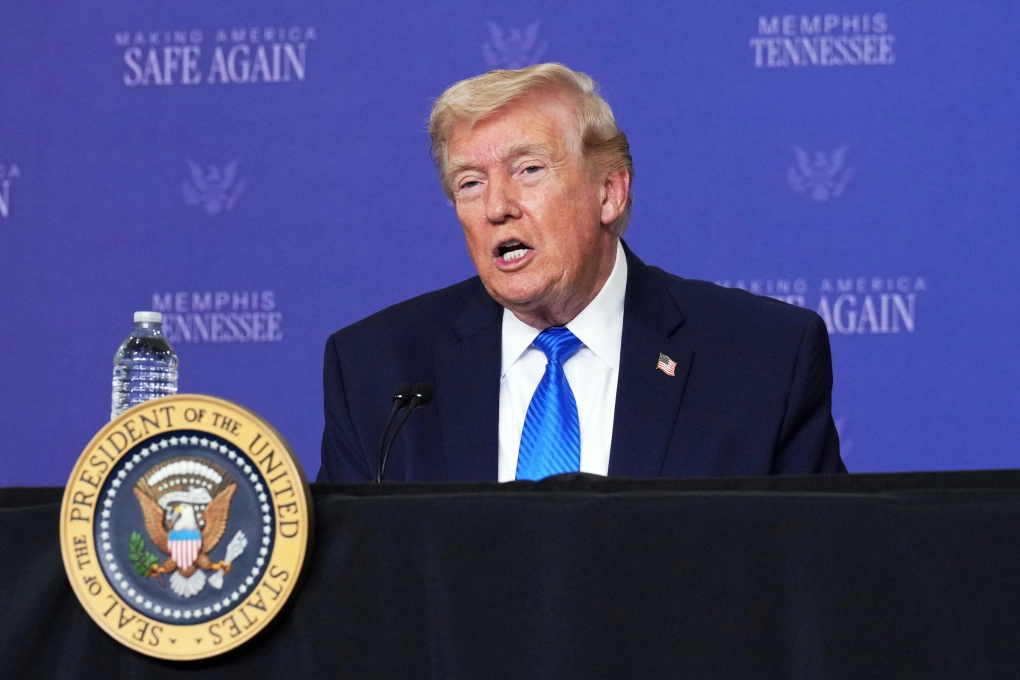
President Donald Trump at the White House on March 16. Photo: AFP
Trump has tried to persuade countries to help ensure oil tankers can pass through the Strait of Hormuz, but so far many US allies have not made commitments or have flatly rejected the proposal.
"There are countries the US has deployed as many as 45,000 troops to protect from danger, and we have done a very good job. Yet when we ask, 'Do you have any minesweepers?', they reply, 'we will not participate, sir'," the US president said.
The US leader described escort operations in the Strait of Hormuz as "a very small thing," even though some oil tankers had been hit, adding that he had known allies would not stand with Washington when it needed support. "For a long time I have criticized the US protecting other countries, because I knew that even if we always protected them, they would not be there if one day we needed help," he said.
The Middle East war has entered its third week and still shows no sign of ending. The Strait of Hormuz, through which 20% of the world's oil and liquefied natural gas passes, remains almost completely blocked, driving up energy prices and raising inflation concerns.
The conflict has inflicted economic damage on US allies, which were not consulted in advance about the airstrikes on Iran and have had to endure intense criticism and threatening language from President Trump since his return to power.
Japan, Germany, Spain and Italy have said they currently have no plans to send ships to help reopen the strait.
A spokesperson for German Chancellor Friedrich Merz said the Middle East conflict stemmed from US-Israeli attacks on Iran, stressing that the operation was "not related to NATO" and was "not NATO's war."
"The possibility of NATO becoming involved in this war was never considered before the conflict and is not being considered now," the spokesperson added.
Huyen Le (According to Reuters, CNN)