Replace Brake Booster Vacuum Hose: DIY Fix for Hard Pedals
How to replace brake booster vacuum hose and restore brake assist
If you need to replace brake booster vacuum hose, the usual warning signs are a hard brake pedal, a hissing sound, or brake assist that feels weak or inconsistent. The hose carries engine vacuum from the intake manifold to the brake booster, where it helps reduce pedal effort and makes stops easier. The goal is to swap out a cracked, leaking, or collapsed hose without leaving behind a new vacuum leak.
Before you remove anything, check the hose ends, the fittings, and the booster grommet. It also helps to test the check valve first, because a failing valve can look a lot like a bad hose. A proper repair uses the correct molded hose or vacuum-rated hose and secure quick-connect fittings so the system seals the way it should.
Brake booster vacuum leak symptoms and diagnosis
Brake booster vacuum leak symptoms often start with a hard brake pedal, but they can also show up as idle changes, a hissing sound, or reduced brake assist after startup. If the leak is near the intake manifold, booster, or hose route, you may hear it clearly at idle. A cracked hose is one possibility, but a failed one-way check valve or damaged booster grommet can create the same complaint.
Start with a visual inspection for splits, brittleness, oil saturation, or loose connections. You can also check whether the hose collapses under load and whether engine vacuum supply is present at the line. When the leak is not obvious, a smoke test is one of the best ways to find the source before replacing parts that are still good.
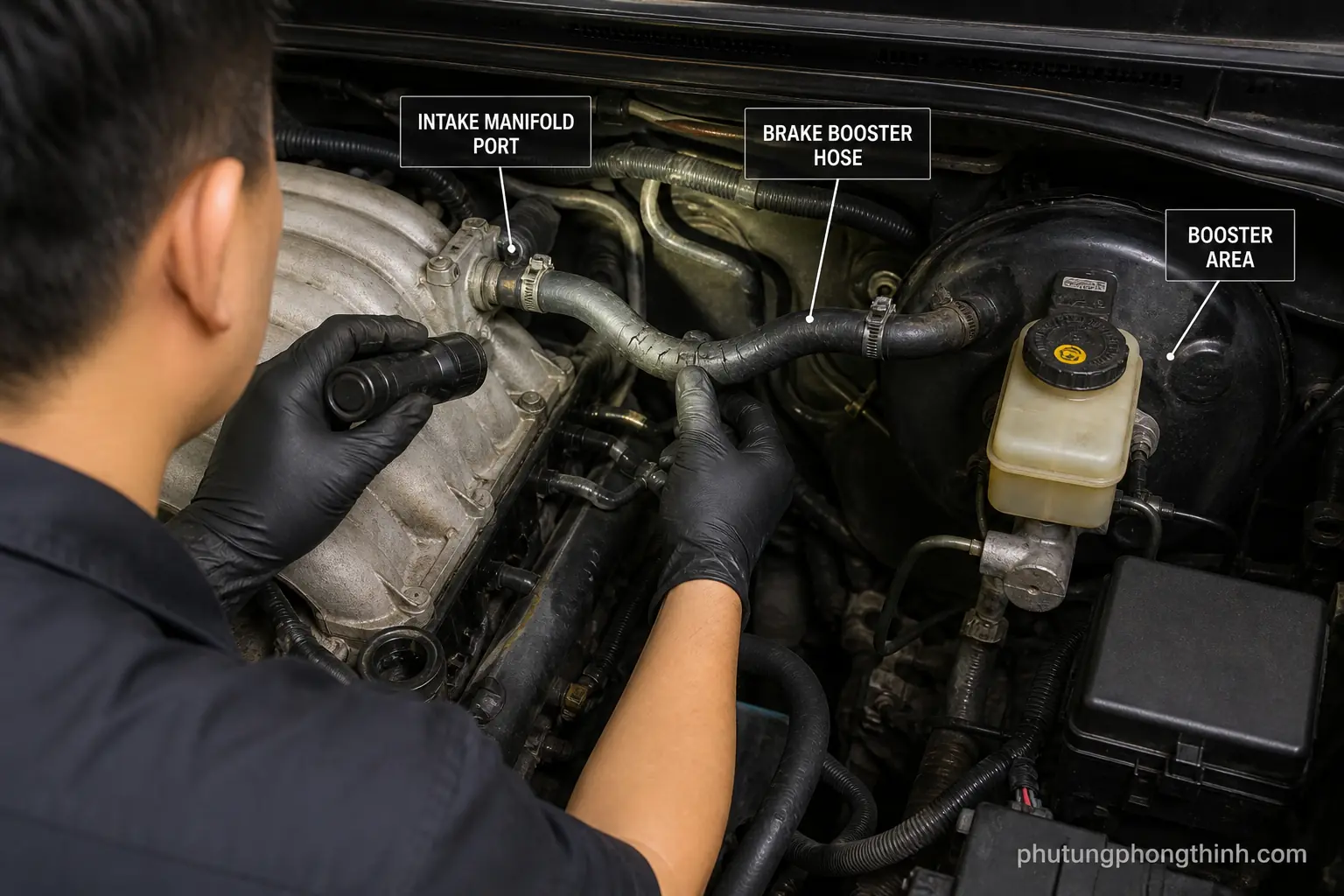
Tools, hose types, and replacement parts you may need
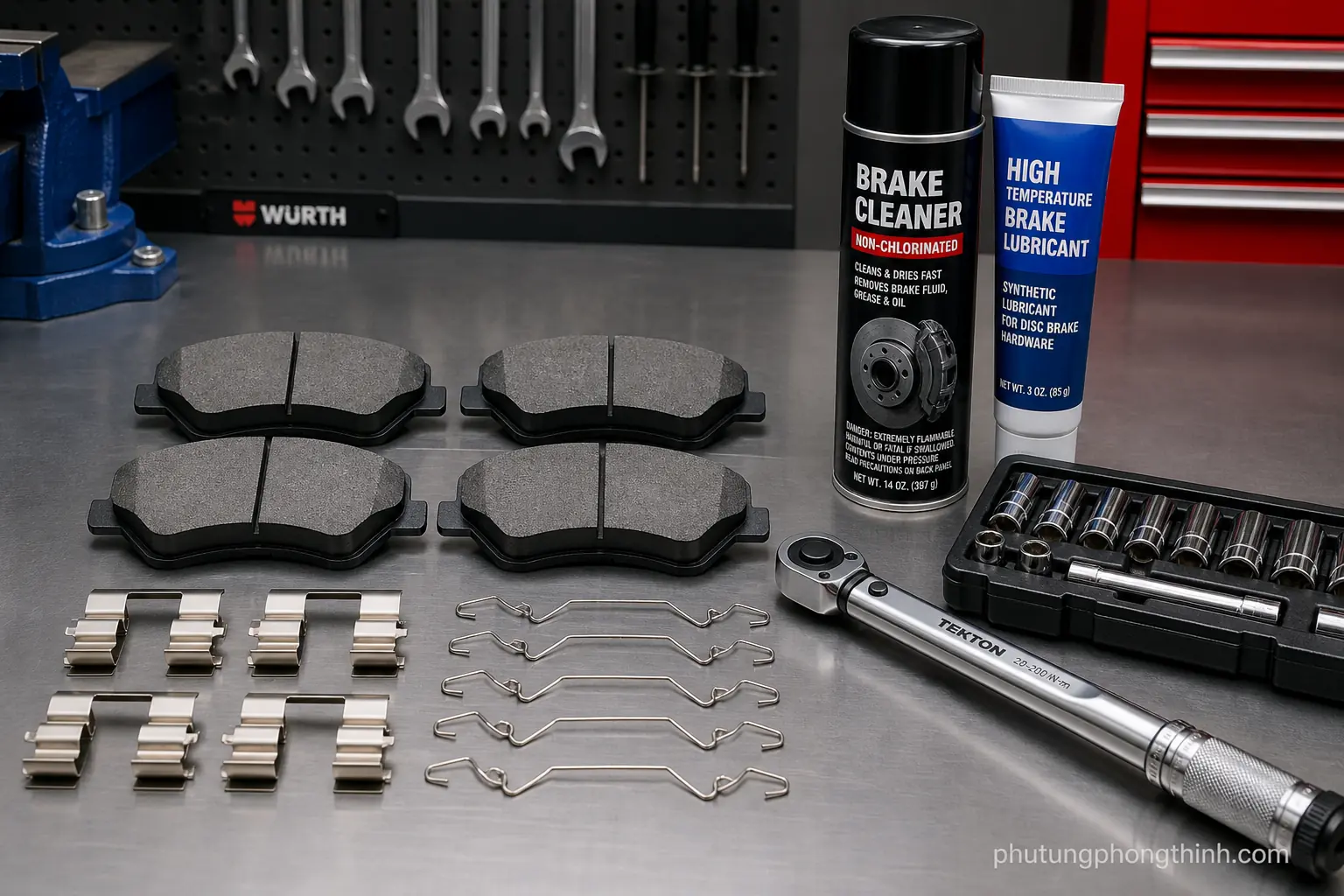
Have the basics ready before you start: pliers, screwdrivers, a hose pick, and a flashlight will cover most jobs. It is also important to know whether your vehicle uses a molded hose or generic vacuum-rated hose, because fit matters just as much as diameter. Some applications use quick-connect fittings or a separate booster grommet, and those parts should be inspected or replaced if they are worn.
- Choose hose that is rated for engine vacuum and heat.
- Replace the one-way check valve if testing shows it leaks or sticks.
- Match the original hose diameter and routing to avoid kinks and future vacuum leak problems.
Step-by-step process to replace the brake booster vacuum hose
Begin by noting the hose routing before removal so the replacement can follow the same path. Disconnect the hose carefully from the intake manifold, check valve, and booster connection, and avoid damaging any fittings as you work. With the hose off, inspect the booster grommet and nearby vacuum lines for wear or cracking.
Install the new hose in the exact same route as the original so it does not rub, sag, or bend too sharply. Seat every quick-connect fitting and the booster grommet fully until it locks or seals. If you are reusing the check valve or installing it with the new hose, make sure the orientation is correct before closing everything up.
Once the repair is complete, start the engine and confirm that pedal feel improves. Listen closely for leaks at idle and recheck each connection. After a short test drive, make sure there is no new vacuum leak or warning sign.

How to test a brake booster check valve after replacement
The one-way check valve is what helps hold vacuum for brake assist, so it matters just as much as the hose itself. If it leaks or sticks, you may lose assist after the engine shuts off, and the problem can feel like the new hose was installed incorrectly. A bad valve can easily make a fresh repair seem suspect.
- Use a simple hand test to confirm one-way airflow.
- Listen for leaks and check whether vacuum is retained in the booster.
- Use a smoke test or deeper diagnosis when the issue is still unclear.
Preventing future vacuum leaks in the brake booster system
After the repair, inspect the nearby vacuum lines and the intake manifold port for age-related wear. Heat, oil contamination, and poor routing can shorten hose life quickly, especially on vehicles that already showed brake assist problems. A quick periodic check can help catch issues before they turn into another hard brake pedal diagnosis.
If the pedal still feels hard after the hose and valve are replaced, the booster itself may need attention. That usually means the problem is elsewhere in the vacuum system, so it is worth revisiting the connections, grommet fit, and hose routing before moving on to bigger repairs. If you are also sorting other vehicle work, a related rear differential part may be something you notice during the same maintenance visit.
FAQ: brake booster hose replacement questions
Can you use universal vacuum hose instead of a molded hose? Sometimes, but only if the routing is simple and the hose can follow the original path without kinking or collapsing. A molded hose is usually the safer choice when the factory setup has tight bends or specific fittings.
How do you know whether the hose or check valve failed first? In many cases, you cannot know for sure without testing both parts. Inspect the hose for cracks or soft spots, then test the valve for one-way flow and vacuum retention.
Is a hissing sound always a brake booster vacuum leak? No. A hiss can come from the hose, check valve, grommet, or another vacuum leak nearby. That is why listening alone is helpful, but not enough for a final diagnosis.
When should the booster grommet be replaced too? Replace it if it is hard, cracked, loose, or no longer seals tightly around the hose or valve. It is a small part, but a bad grommet can create the same symptoms as a failed hose.
At the end of the repair, take a final look at every connection and confirm the pedal feels normal before calling it done. If you need a matching shim component for other maintenance, you can find one matching shim component here.
Frequently Asked Questions
Can a bad brake booster vacuum hose cause a hard brake pedal at idle only?
Yes. If the hose leaks or collapses, brake assist can be weaker at idle when engine vacuum is needed most. The pedal may feel worse at a stop than it does while driving.
Should you replace the check valve when you replace the hose?
Not always, but it is smart to test it while the system is apart. If the valve leaks, sticks, or fails to hold vacuum, replacing it at the same time can prevent a repeat repair.
What does a brake booster vacuum leak sound like?
It often sounds like a steady hiss near the intake manifold, hose, or booster area. The sound may be more noticeable with the engine idling and the hood open.
Can a vacuum leak affect engine idle as well as braking?
Yes. Because the brake booster uses engine vacuum, a leak in the hose or valve can cause idle changes and reduce brake assist at the same time.
Is smoke testing necessary for every brake booster hose repair?
No, but it is very useful when the problem is hard to find. A smoke test can reveal small leaks at the hose, grommet, or fittings that are easy to miss by eye.