Rear Drum Brake Adjustment: 7 Signs It’s Too Loose or Tight
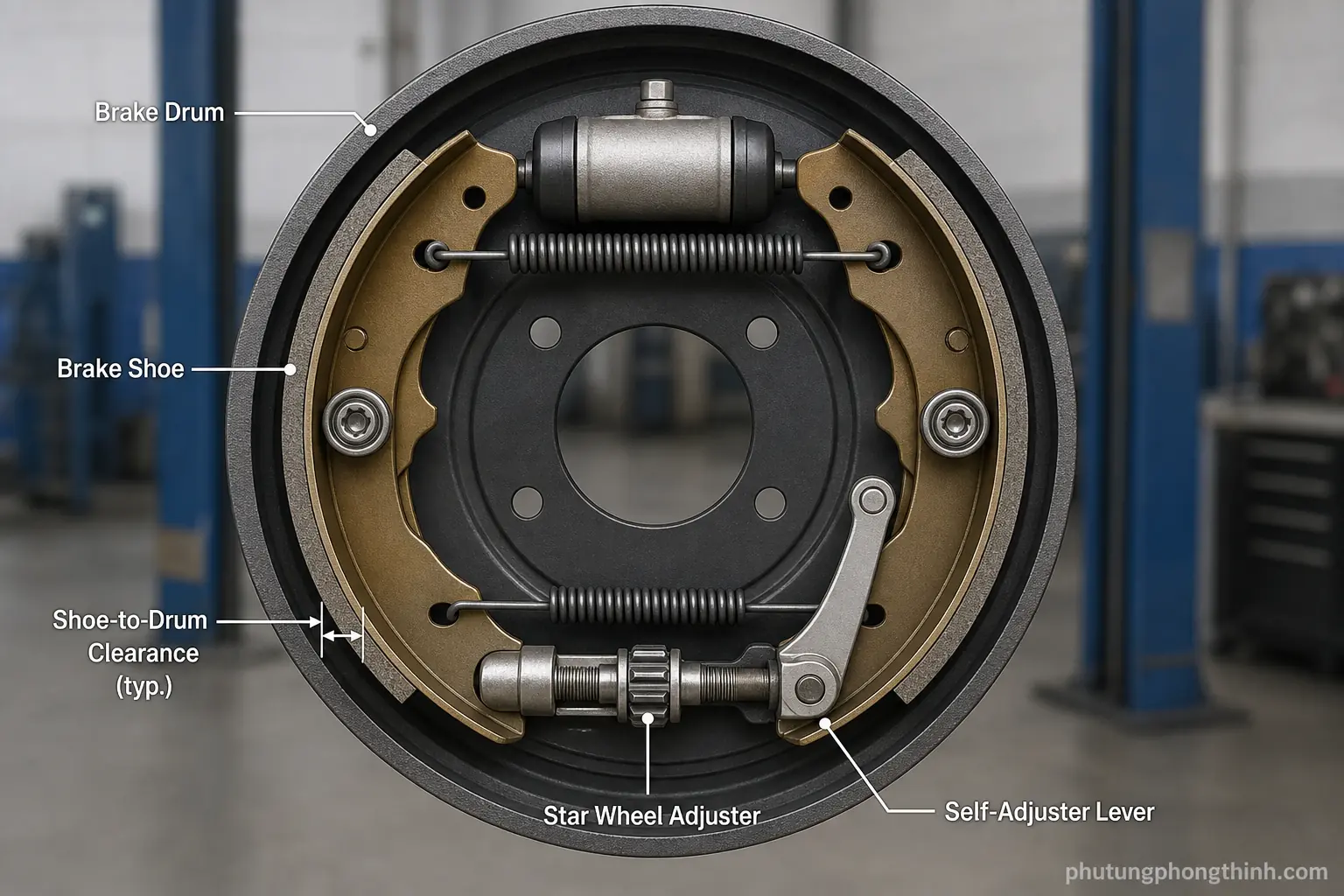
Rear drum brake adjustment: what normal feels like
Good rear drum brake adjustment starts with the right shoe-to-drum clearance. In normal use, the shoes sit close enough to the drum for quick brake response, but not so close that the wheels feel bound up or drag when you roll. That balance is what gives you a firm, predictable pedal and smooth stopping.
When the adjustment is right, the rear brakes help the vehicle stop without causing extra resistance. You should get immediate engagement when you press the pedal, yet the drums should still turn with only the faintest whisper of contact. That same balance also matters for the parking brake, which depends on correct rear brake adjustment to hold the vehicle securely.
7 signs your rear drum brakes are too loose or too tight
When rear drum brake adjustment is off, the clues are usually easy to spot. The challenge is that the same adjustment symptoms can point to shoes that are too loose or too tight, so you have to read the whole pattern before deciding what to fix.
- Low brake pedal that takes too much pressure to feel normal.
- Excessive pedal travel before the brakes bite.
- Weak rear braking that makes the front brakes do most of the work.
- Brake drag that slows the vehicle or makes the rear wheels feel stuck.
- Pulling to one side during braking.
- Rear wheel heat after driving, especially on one side.
- Parking brake that feels too loose, too high, or unable to hold the car.
These signs often overlap, so the best diagnosis comes from matching the symptom to what the brakes do when hot, cold, and at rest. A low pedal can mean excess clearance, but it can also appear when hardware or hydraulics are not working as they should.
How to tell if the shoes are loose or the drums are dragging
The fastest way to separate loose shoes from dragging drums is to pay attention to wheel rotation, heat, smell, and pedal feel. If the wheels spin freely by hand and the pedal feels long or soft, the adjustment may be too loose. If the wheel is hard to turn, the drum gets hot, or you smell brake lining after a short drive, the brakes may be too tight or the self-adjuster may be overdoing its job.

A properly adjusted drum brake should have just enough contact to feel consistent, but not enough to bind. Side-to-side differences are another useful clue: if one rear wheel is much hotter or harder to turn than the other, the problem is often uneven adjustment, a sticking part, or a worn component on that side.
Common causes of rear drum brake adjustment problems
Rear drum brake adjustment problems usually come back for a reason. A worn or sloppy star wheel adjuster can make fine-tuning impossible, while a seized or overly active self-adjuster lever can keep the shoes too tight. Weak drum brake hardware can also let the shoes sit wrong, and a sticky parking brake cable may hold the shoes partly applied even when the pedal is released.
Wheel cylinder issues can confuse the diagnosis too. A leaking or sticking wheel cylinder may create poor brake response or uneven shoe movement that looks like bad adjustment. In the same way, worn shoes or out-of-round drums can make a correct adjustment seem wrong because the contact surface itself is no longer consistent.
In some cases, the symptom feels so much like broader thermal stress that you may also want to think beyond the brakes, including related parts such as a cooling system radiator if the vehicle has been running hot for other reasons.
- Worn star wheel adjuster teeth or threads.
- Self-adjuster lever sticking or ratcheting too aggressively.
- Weak, bent, or rusted brake hardware.
- Parking brake cable that does not release fully.
- Wheel cylinder seepage, sticking, or uneven movement.
- Worn shoes or drums that are no longer round.
What to inspect before changing the adjustment
Before you turn the star wheel, inspect the parts that control how the shoes sit inside the drum. Check shoe lining thickness, drum condition, return springs, hold-down parts, and any rust or damage in the hardware. If those pieces are worn or broken, an adjustment alone will not stay right for long.
Also check the parking brake cable free play and make sure it releases fully. A cable that hangs up can make the brakes seem too tight even when the adjustment is close. While you are there, look for fluid contamination, uneven wear, or signs that the wheel cylinder is sticking.
- Shoe lining thickness and wear pattern.
- Drum surface wear, scoring, or out-of-round condition.
- Return springs and hold-down hardware condition.
- Rust, bent parts, or missing drum brake hardware.
- Parking brake cable free play and release action.
- Fluid contamination or a stuck wheel cylinder.
When a rear drum brake adjustment is still not enough
If the problem comes back quickly after adjustment, or if one side cannot be set the same as the other, the issue is usually deeper than clearance alone. At that point, replacement hardware, wheel cylinder service, or parking brake cable repair may be needed to restore normal operation.
Severe brake drag, repeated overheating, or a parking brake that will not hold well are signs that simple brake adjustment is no longer the answer. In those cases, worn parts or a failing component are keeping the system from staying in the correct position. If you are sorting out the rear of the vehicle more broadly, it may also be a good time to look at a rear signal lamp assembly as part of a larger road-readiness check.
- Adjustment does not hold for long.
- One wheel keeps dragging or overheating.
- Both sides cannot be adjusted evenly.
- Brake hardware is weak, rusty, or damaged.
- Wheel cylinder problems keep returning.
- Parking brake performance remains poor after adjustment.
FAQs about rear drum brake adjustment
Rear drum brakes do not need constant adjustment on every vehicle, but they do need attention when pedal feel, parking brake hold, or rear wheel drag starts to change. Self-adjusters can reduce how often manual adjustment is needed, but they do not eliminate maintenance if the hardware is worn or stuck. Whether the parking brake should be set during adjustment depends on the service procedure for the vehicle, so it is best to follow the manual. Both sides should end up evenly adjusted, and a low pedal can come from either excessive shoe clearance or a hydraulic problem such as air, leakage, or a weak master cylinder.
- How often should rear drum brakes be adjusted?
- Do self-adjusting drum brakes eliminate manual adjustment?
- Should the parking brake be set during rear drum brake adjustment?
- Do both rear drum brakes need to be adjusted equally?
- What does it mean if one rear wheel drags more than the other?
- Can a low brake pedal be caused by adjustment instead of hydraulics?
Frequently Asked Questions
How often should rear drum brakes be adjusted?
There is no universal interval. Some vehicles need adjustment rarely because the self-adjuster works well, while others need service when pedal travel grows, parking brake hold gets weaker, or rear brakes start to drag or feel uneven.
Do self-adjusting drum brakes eliminate manual adjustment?
No. Self-adjusters can help keep shoe-to-drum clearance in range, but they still depend on clean, moving hardware. If the mechanism sticks, wears out, or over-adjusts, manual inspection and repair are still needed.
Should the parking brake be set during rear drum brake adjustment?
It depends on the vehicle’s service procedure. Some systems are adjusted with the parking brake released so the shoes can center correctly, while others use a specific parking brake position. Always follow the manufacturer method.
Do both rear drum brakes need to be adjusted equally?
They should end up very close to each other. Uneven adjustment can cause pulling, different wheel temperatures, and uneven braking force, even if both sides seem to work on their own.
Can a low brake pedal be caused by adjustment instead of hydraulics?
Yes. Excessive shoe-to-drum clearance can cause a long or low pedal. But air in the system, a leak, or a failing hydraulic component can create a similar symptom, so the brakes should be inspected as a whole.