How to Tell if Thermostat Is Bad: 7 Clear DIY Checks
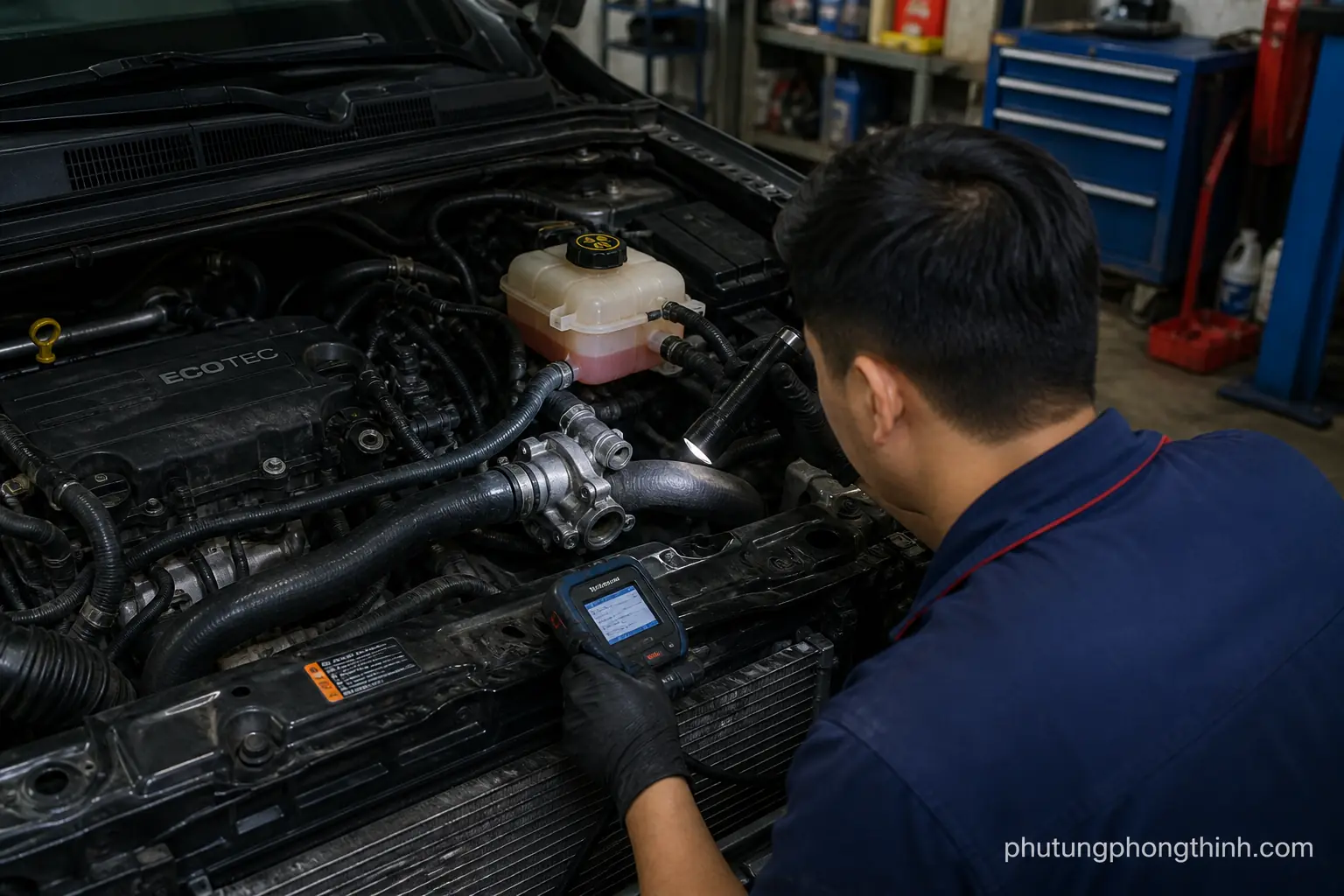
How to tell if thermostat is bad: the key symptoms
If you’re trying to figure out how to tell if thermostat is bad, start with the pattern of symptoms. A thermostat stuck open usually causes slow warm-up, weak cabin heat, and a temperature gauge that never reaches normal. A thermostat stuck closed does the opposite: the engine can overheat quickly because coolant can’t circulate through the radiator.
Those clues matter, but they are not proof by themselves. Low coolant or air pockets can create the same warning signs, along with inconsistent heater output and odd gauge movement. That’s why symptom-checking is step one, not the final answer.
- Slow warm-up often points to a stuck-open thermostat.
- Rapid overheating can point to a stuck-closed thermostat.
- Fluctuating gauge readings may mean coolant flow is unstable.
- Poor cabin heat can come from a thermostat issue or low coolant.
- Radiator fan behavior can support the diagnosis, but it is not conclusive.
7 DIY checks to confirm thermostat problems
Before you replace parts, use a few low-cost cooling system checks to confirm what the thermostat is actually doing. These steps move from a cold engine to warm-up and operating temperature, so you can separate a real thermostat fault from other engine cooling problems.
The goal is simple: verify thermostat behavior before you buy parts, drain coolant, or tear into the thermostat housing.
- Start with coolant level and air pocket checks.
- Watch how the temperature gauge rises from cold.
- Use hose temperature and scan data to confirm flow.
- Cross-check heater output and radiator fan behavior.
- Compare the symptoms with other overheating causes.
Check 1: Verify coolant level and look for air pockets
Always inspect coolant level with the engine cold. Low coolant can make the engine overheat, delay heater performance, or create strange gauge readings that look like a bad thermostat. Trapped air can do the same thing by blocking circulation and leaving the thermostat with inaccurate temperature readings around it.
If you suspect air pockets, bleed the cooling system before you condemn the thermostat. A quick refill is not enough if air remains trapped in the radiator, heater core, or upper passages.
Check 2: Watch the temperature gauge during cold start
On a healthy system, the gauge should rise gradually and settle near normal once the engine reaches operating temperature. A thermostat stuck open often delays that climb, so the engine stays cold longer than it should and the cabin heat may never feel strong. A stuck-closed thermostat can send the gauge upward much faster than normal.
That warm-up pattern is one of the easiest clues to read because it shows how the cooling system behaves in real time.
Check 3: Feel the upper radiator hose
The upper radiator hose should stay relatively cool at first, then warm up when the thermostat opens and hot coolant starts moving through the radiator. That change is one of the best quick checks for thermostat operation.
If the hose warms too early, the thermostat may be stuck open. If the engine gets hot but the hose stays cool, the thermostat may be stuck closed or coolant flow may be blocked.

Check 4: Read scan tool live data
Scan tool live data gives you the coolant temperature the dash gauge may hide. Watch the coolant temperature rise from a cold start and see whether it climbs smoothly to a normal range or stalls out too low. If the engine warms very slowly, that supports a stuck-open thermostat.
A P0128 code often points to a thermostat that is not letting the engine warm up fast enough, which makes this check especially useful.
Check 5: Compare hose and housing temperature with an infrared thermometer
An infrared thermometer adds precision when the hose test is unclear. Measure the thermostat housing, the upper radiator hose, and nearby coolant passages as the engine warms. A sharp temperature jump can show the moment coolant begins circulating.
Those readings help confirm whether the thermostat is opening normally or whether coolant is not moving the way it should.
Check 6: Look for heater and fan clues
Weak or cold heater output can happen when the thermostat is stuck open, but it can also show up if the coolant level is low. Radiator fan cycling can support an overheating diagnosis, yet it does not prove a bad thermostat on its own.
Use these clues as supporting evidence, not as the final verdict, because fan problems can also cause car overheating.
Check 7: Confirm against other engine overheating causes
Before you blame the thermostat, compare the symptoms with other cooling system faults. A worn water pump, a restricted radiator, or a major coolant leak can create the same overheating complaints.
If the engine keeps overheating after you refill coolant, the problem may be bigger than the thermostat. When the warm-up pattern, hose test, and scan data all point the same way, the thermostat remains the most likely culprit.
How to test a car thermostat on the bench
If you’ve already removed the part, the bench test is a straightforward way to check opening temperature. Place the thermostat in hot water and watch whether the valve opens at roughly the expected temperature. It should open smoothly rather than sticking or moving in jerks.
Let it cool afterward and make sure it closes again. This test confirms basic movement, but it does not rule out every real-world cooling issue in the car.
Thermostat stuck open vs stuck closed symptoms
Use this quick comparison if you’re still deciding whether the thermostat is the problem. The symptom pattern usually makes the failure mode clearer than any single test.
Stuck-open problems are usually about being too cool; stuck-closed problems are usually about building heat too fast.
- Stuck open: slow warm-up, weak heat, low coolant temperature.
- Stuck closed: fast overheating, pressure buildup, hot engine with poor circulation.
- Uncertain: recheck coolant level, air pockets, and hose temperature.
| Failure mode | Most common symptoms | What to check next |
|---|---|---|
| Stuck open | Slow warm-up, poor cabin heat, low gauge reading | Scan tool live data, upper radiator hose timing |
| Stuck closed | Rapid overheating, hot engine, cool upper hose | Infrared thermometer, coolant flow checks |
| Not clearly a thermostat | Intermittent overheating, changing heater output, gauge swings | Coolant level, air pockets, radiator, water pump |
If you’re weighing a repair and need a factory-fit suspension part for another maintenance step, you can compare options like this factory-fit suspension part while you finish diagnosing the cooling issue.
When to replace the thermostat and bleed the cooling system
Replace the thermostat when multiple checks point to the same fault, especially if the engine warms too slowly or overheats in a way that matches the symptom pattern. While you’re in there, use fresh coolant, install a new gasket, and torque the thermostat housing correctly so the seal holds.
After the repair, bleed the cooling system carefully to remove trapped air. That step matters because leftover air can make a good repair look bad and can cause repeat overheating.
- Replace the thermostat if the symptom pattern and test results agree.
- Use new coolant and a fresh gasket at the housing.
- Follow the correct torque on the thermostat housing fasteners.
- Bleed air from the system before driving normally.
If you’re already moving from diagnosis to replacement and want to compare maintenance parts, an OEM suspension bushing option may be worth noting alongside the rest of your service list.
FAQ: thermostat diagnosis questions
Can a bad thermostat cause no heat in the car? Yes. A thermostat stuck open can keep the engine too cool for strong cabin heat, and low coolant can do the same thing.
Can you drive with a failing thermostat? Only short-term, and not if the engine is overheating. Repeated overheating can cause major engine damage fast.
Does overheating always mean thermostat failure? No. Water pump problems, radiator restrictions, coolant leaks, and air pockets can cause the same symptom.
How long should a thermostat take to open? It depends on the vehicle, but the engine should begin warming normally within a few minutes and reach operating temperature without a huge delay or sudden spike.
Is a scan tool worth using? Yes, especially if the dash gauge is vague or you see a P0128 code. Live coolant temperature data makes diagnosis much easier.
Frequently Asked Questions
Can a bad thermostat cause no heat in the car?
Yes. A thermostat stuck open can keep the engine too cool for strong cabin heat, and low coolant can do the same thing.
Can you drive with a failing thermostat?
Only short-term, and not if the engine is overheating. Repeated overheating can cause major engine damage fast.
Does overheating always mean thermostat failure?
No. Water pump problems, radiator restrictions, coolant leaks, and air pockets can cause the same symptom.
How long should a thermostat take to open?
It depends on the vehicle, but the engine should begin warming normally within a few minutes and reach operating temperature without a huge delay or sudden spike.
Is a scan tool worth using?
Yes, especially if the dash gauge is vague or you see a P0128 code. Live coolant temperature data makes diagnosis much easier.