How to Tell if Heater Core Is Clogged: 7 Easy Checks
How to tell if heater core is clogged: the quickest signs
If you’re trying to figure out how to tell if heater core is clogged, the fastest clue is usually weak cabin heat. A restricted heater core often makes the HVAC system blow air that never gets fully warm, even when the engine seems to be at normal temperature. You may also notice heat that changes oddly, such as being warm at idle but colder while driving, or the reverse.
Foggy windows and poor defrost performance can also point to a heater core flow issue, since the cabin air never gets enough heat to clear moisture well. Just keep in mind that these are clogged heater core symptoms, not a final diagnosis by themselves.
Check the coolant level and look for trapped air
Before blaming the heater core, inspect the coolant level only when the engine is completely cool. Low coolant can starve the heater circuit and create weak cabin heat that feels a lot like a clog. If the level is low, top-off alone may not solve the problem until you find the leak.
Trapped air after a coolant service can cause the same complaint. An air pocket can block coolant circulation through the heater core and leave you with no cabin heat troubleshooting symptoms that mimic a restriction. In some cases, a proper cooling system bleed procedure restores normal heat without any heater core repair.

Compare inlet and outlet heater hose temperatures
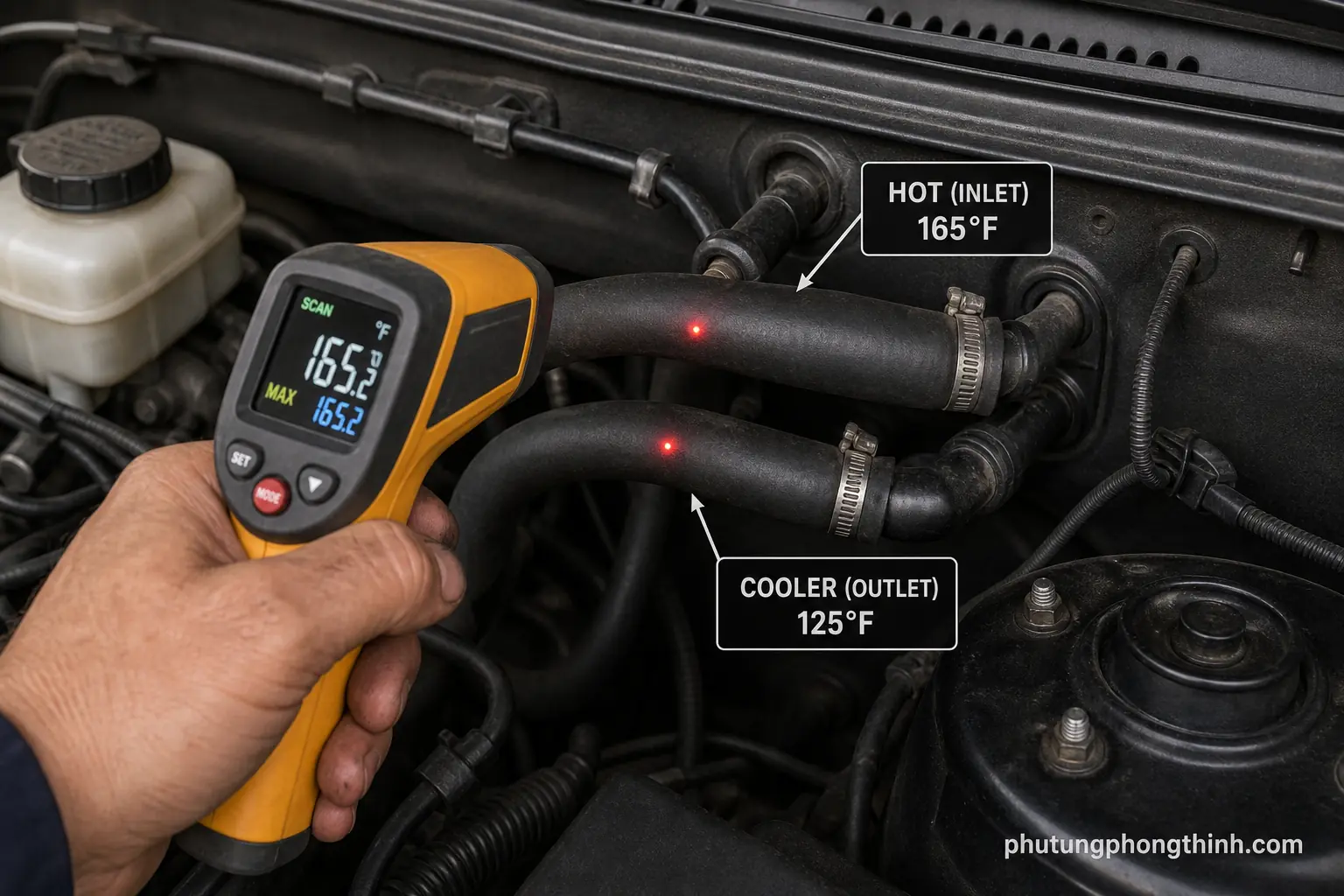
One of the best heater core diagnosis checks is comparing the heater hose temperatures at the firewall. Find the inlet hose and outlet hose, then feel them carefully or use an infrared thermometer for safer, more accurate readings. When the heater is on and the engine is warm, both hoses should usually be hot if coolant flow is normal.
A large temperature difference can suggest restricted flow through the heater core. For example, a hot inlet hose with a much cooler outlet hose often points to a clog, scale, or sediment buildup. That kind of pattern is one of the clearest signs when learning how to test heater hoses.
Rule out other common causes of weak cabin heat
Not every weak heater problem means the heater core is clogged. A thermostat stuck open can keep the engine from reaching proper operating temperature, which leads to slow warm-up and weak heat. If the engine itself never gets fully hot, the HVAC system cannot deliver strong cabin temperature.
Blend door actuator symptoms are another common look-alike. If hot coolant is present but the air stays cold, the issue may be in the air-mixing side of the HVAC system rather than the cooling system. Vehicles with a heater control valve can also lose heat if that valve sticks closed. And if the car defrost not working is the main complaint, airflow or door control problems may be part of the story.
- Thermostat stuck open can delay normal heat
- Blend door actuator problems can block warm air from reaching the cabin
- Heater control valve failure can stop coolant flow to the heater core
- Defrost problems can point to an HVAC airflow issue instead of a coolant restriction
When a heater core flush makes sense vs replacement
If the hose test points to restricted flow, a heater core flush may be worth trying. A backflush can sometimes clear sediment, rust, or scale that is limiting coolant circulation through the heater circuit. This is most promising when the core is restricted but not leaking and when both hoses show signs of poor flow rather than a complete blockage.
Even so, a flush is sometimes only a temporary fix. If the core is badly clogged, repeatedly restricted, or leaking coolant into the cabin, replacement is the better long-term repair. A heater core that is too far gone can keep causing weak heat no matter how often it is cleaned.
| Situation | What it usually means | Best next step |
|---|---|---|
| Light sediment, some flow | Partial restriction | Try a backflush |
| Heat returns briefly after flushing | Restriction is still present | Monitor or plan for repair |
| Coolant smell or wet carpet | Possible leak | Replace the heater core |
| No change after flush | Core may be severely blocked | Move toward replacement |
If you are already dealing with wider drivability concerns alongside heating complaints, a related Ford Focus part may be worth noting during the same repair conversation.
A simple 7-step driveway checklist
Use this quick sequence to narrow down the problem before you spend money on parts. Start with the easy checks, then move toward more confident heater core diagnosis if the symptoms still point that way.
- Verify the coolant level when the engine is cool
- Feel the inlet hose and outlet hose at the firewall
- Check blower output and make sure defrost mode works
- Look for trapped air if the coolant was recently serviced
- Compare heat at idle and at road speed
- Inspect for blend door or control valve issues
- Decide whether to flush, bleed, or seek repair
If the answers still point to a restricted core, a heater core flush may be the next logical step. If the cabin still stays cold after the cooling system is bled and the HVAC checks out, replacement is usually the more reliable fix. For Ford EcoSport and Fiesta owners comparing engine-related symptoms at the same time, an OEM Ford engine sensor can be part of the larger maintenance picture.
Frequently Asked Questions
How do you test heater hoses safely?
Let the engine reach operating temperature, keep hands clear of moving parts, and touch the heater hoses briefly and carefully or use an infrared thermometer instead. You are looking for a strong temperature difference between the inlet and outlet hose. If one hose is hot and the other is much cooler, that can suggest restricted coolant flow through the heater core.
Can low coolant feel like a clogged heater core?
Yes. Low coolant can reduce flow through the heater circuit and cause weak cabin heat, especially at idle. It can feel very similar to a clogged heater core, so always check coolant level first when the engine is cold.
Will a heater core flush fix no heat permanently?
Sometimes, but not always. A flush can clear light debris or scale and restore heat if the core is only partially restricted. If the heater core is heavily clogged, damaged, or leaking, the fix may only be temporary and replacement is usually the better solution.
How can you tell a blend door problem from a clogged core?
A clogged heater core usually shows a coolant flow issue, often with a hot inlet hose and cooler outlet hose. A blend door problem can leave you with cool air even when the heater hoses are hot, because the HVAC system is not directing heated air into the cabin. That distinction makes the hose temperature test very useful.