How to Find a Coolant Leak: 7 Checks That Work
How to find a coolant leak: start with the easiest signs
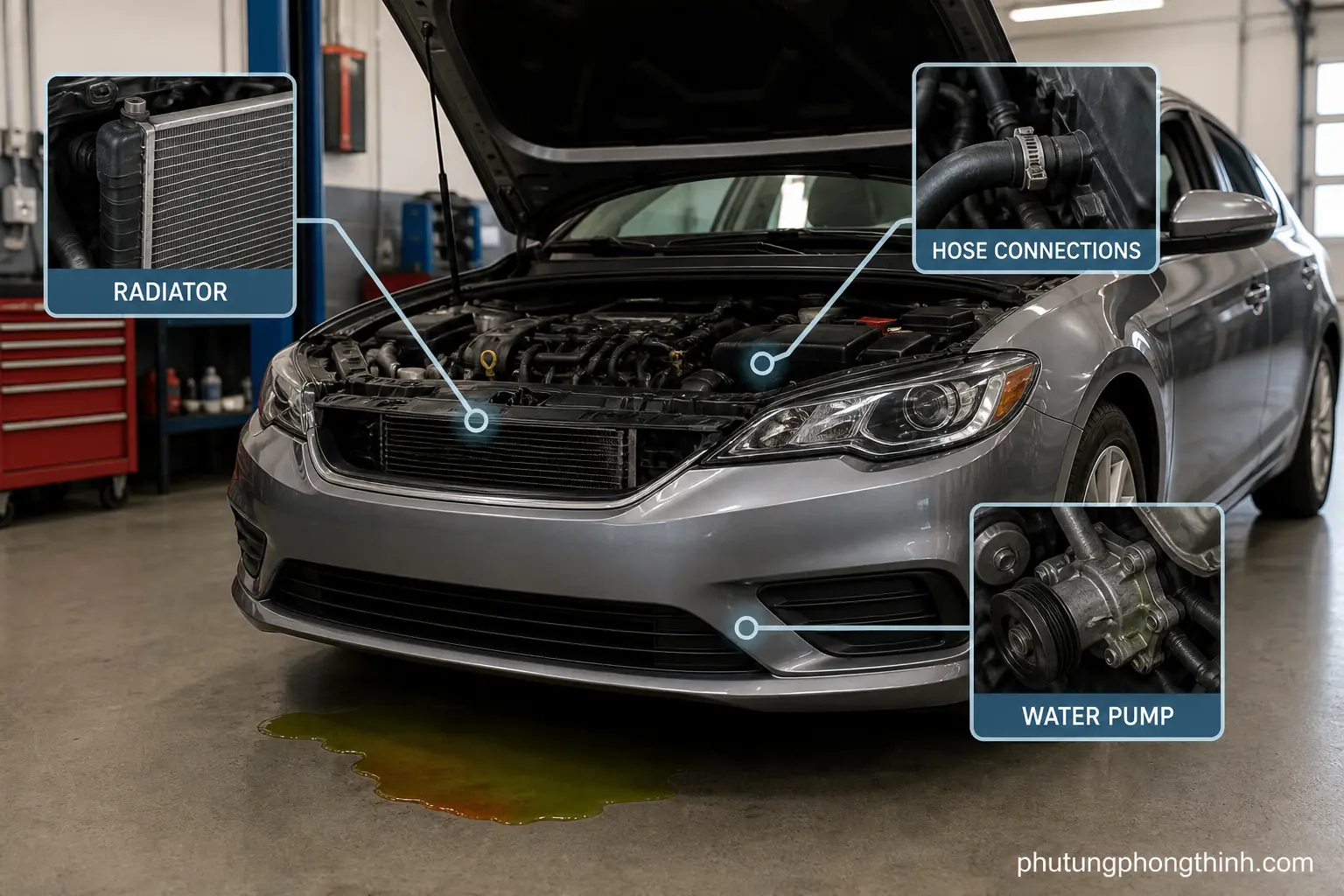
If you are trying to figure out how to find a coolant leak, start with the simplest clues first. Overheating, a dropping coolant reservoir level, and a sweet smell are often the earliest warning signs. After the car has been parked, check the ground for a colored puddle under the front end, because coolant often leaves a distinct trace even before you see anything under the hood. Keep in mind that some leaks are external, while others evaporate on hot parts or only show up when the cooling system is under pressure.
Check the coolant reservoir, cap, and visible hoses

Once the engine is cool, open the hood and inspect the coolant reservoir level before you go any further. This is one of the fastest coolant leak symptoms to verify, and it often points you toward the right area right away. Then look closely at the visible hoses for cracked rubber, loose clamps, wet fittings, or dried residue where coolant has already seeped and dried. The radiator cap and filler neck matter too, because a bad seal or crusty buildup can let pressure escape and create a leak that is hard to spot at first.
- Check the reservoir when the engine is fully cool.
- Feel around hose connections for dampness or sticky residue.
- Inspect the radiator cap and filler neck for crusty buildup or damage.
- Look for hose cracks near bends, clamps, and hard-to-see lower sections.
Trace leaks around the radiator, thermostat housing, and water pump
If the leak is not obvious, move your inspection to the parts where external leaks commonly start. To tell if a radiator is leaking, check the seams, end tanks, and any stone-damaged fins for stains or moisture. Then look at the thermostat housing and nearby hose connections for wet spots or chalky residue that can form after coolant dries. Finally, inspect the water pump weep hole for drips, staining, or bearing noise, since a failing pump can leak gradually before it leaves a big puddle.
- Check radiator seams and end tanks for dampness or staining.
- Look for impact damage or wet fins that suggest a radiator leak.
- Inspect the thermostat housing and hose connections for seepage.
- Watch the water pump weep hole for drips or dried coolant trails.
durable drivetrain protection part can be part of the broader under-car inspection mindset when you are already checking nearby components and looking for wear.
Use a pressure tester or UV dye kit to confirm the source

When visual inspection is not enough, the most useful next step is a cooling system pressure test. With the engine off, a pressure tester can push the system to operating pressure and reveal small leaks that would otherwise stay hidden. A UV dye kit helps in the same way, especially for slow leaks that only show after heat and load. After testing, fresh coolant traces usually appear at the exact failure point, which makes the source much easier to confirm.
Spot internal leak signs in the heater core or head gasket
Not every coolant leak leaves a puddle on the driveway. A heater core problem often shows up as fogged windows, a sweet smell in the cabin, or damp carpet on the passenger side. Head gasket leak signs can be more serious and may include bubbling in the reservoir, white exhaust smoke, or milky oil. If coolant keeps disappearing with no clear external trail, combustion gases may be entering the cooling system.
- Check for fogged windows and a sweet smell inside the car.
- Feel the carpet for dampness near the heater core area.
- Watch for bubbling in the reservoir or white exhaust smoke.
- Look for milky oil that can point to a head gasket issue.
What to do after you find the leak
Once you find the source, do not keep driving if the engine is overheating or the coolant is dropping fast. If you need to move the car a short distance, top it up only enough to get there safely, then schedule the repair as soon as possible. Some faults are simple, like a hose clamp or radiator cap, while others need a more complete professional diagnosis before they are fixed correctly.
- Stop driving if the engine is overheating.
- Top up only enough coolant to move the car safely.
- Schedule repair quickly so the leak does not get worse.
- Expect some fixes to be simple, while others need professional diagnosis.
front suspension knuckle assembly is the kind of related part a technician may handle during broader vehicle service, after the main coolant issue is diagnosed.
Common questions about coolant leak symptoms and repairs
How do you tell if a radiator is leaking versus a hose leak? A radiator leak usually shows at the seams, end tanks, or damaged fins, while a hose leak is more likely at a clamp, crack, or bent section of rubber.
Why does the coolant level keep dropping if there is no puddle? The leak may be very small, may only appear under pressure, or may be evaporating on hot engine parts before it reaches the ground.
What are water pump leak symptoms? Common signs include drips near the water pump weep hole, staining around the pump, and sometimes bearing noise.
When should you suspect a head gasket leak? If you see bubbling in the reservoir, white exhaust smoke, milky oil, or repeated unexplained coolant loss, the head gasket should be checked.
Can heater core leak symptoms be mistaken for something else? Yes. Fogged windows, a sweet smell, and damp carpet can also seem like a wet weather issue at first, so the cabin should be inspected carefully.
Frequently Asked Questions
Can you find a coolant leak without a pressure tester?
Yes. You can start with a cool-engine inspection, look for a colored puddle, check the reservoir level, and trace wet residue around hoses, the radiator, thermostat housing, and water pump. A pressure tester just makes small leaks easier to confirm.
What color is coolant when it leaks?
Coolant is often green, pink, orange, yellow, or blue depending on the formula used in the vehicle. The key clue is usually the bright colored residue or puddle, not one exact color.
Is it safe to drive with a small coolant leak?
Only for a very short distance if the engine is not overheating and the level can be kept safe. If the temperature climbs or the leak is getting worse, stop driving and repair it quickly.
Why does my car smell sweet but not overheat yet?
A sweet smell can mean coolant is escaping and vaporizing before it causes a major temperature problem. That often happens with small external leaks or a heater core seep.
What is the fastest way to narrow down an internal coolant leak?
Look for cabin fogging, damp carpet, white exhaust smoke, bubbling in the reservoir, and milky oil. Those signs help separate heater core issues from head gasket problems.