How to Diagnose Brake Drag: 7 Checks to Find the Cause
How to Diagnose Brake Drag: Start With the Symptoms
If you are learning how to diagnose brake drag, start by noticing the symptoms before taking anything apart. Brake drag means the brakes are not fully releasing, so the pads or shoes keep rubbing and create continuous friction. Common warning signs include a hot wheel, a burnt smell, uneven brake dust, reduced fuel economy, pulling to one side, or sluggish acceleration.
One wheel hotter than the others is one of the strongest clues, but the cause may be in the caliper, hose, or parking brake system. The checks below move from simple observations to deeper hydraulic and hardware tests, so let the brakes cool before touching anything and use safe lifting practices. The goal is to isolate whether the drag is mechanical, hydraulic, or parking-brake related.
Check 1: Confirm the Dragging Wheel is Really Hot
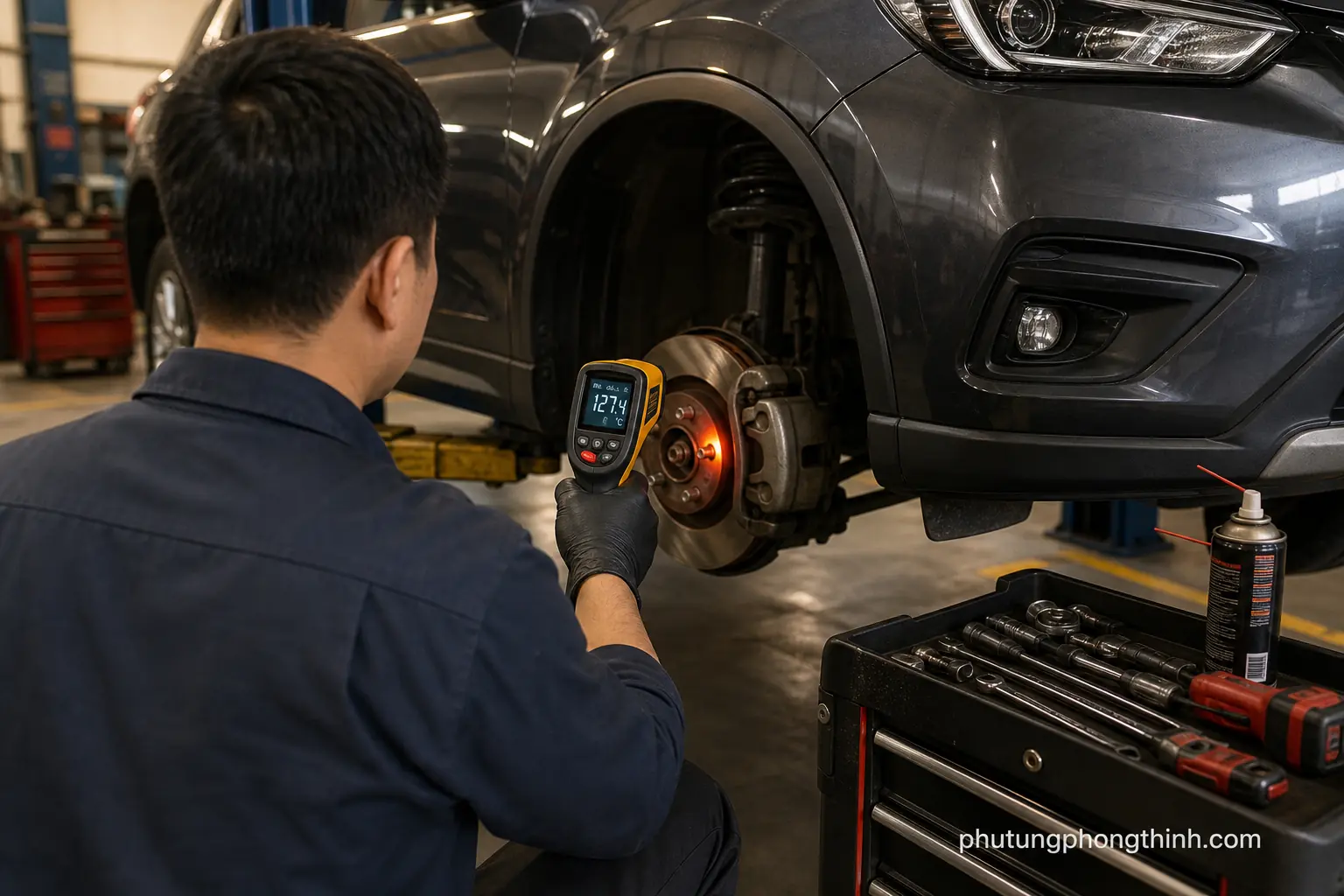
The first step is to verify the problem without guessing. If it is safe, you can use the back-of-the-hand caution method, but an infrared thermometer is better because it gives a quick temperature comparison without contact. After a short drive, compare the rotor and wheel temperatures side to side.
A noticeably hotter wheel supports brake drag, while normal temperatures point somewhere else. A single hot wheel usually means a localized problem, both front wheels hot can point to a system issue or driving condition, and rear heat often suggests a parking brake or rear caliper issue.
Check 2: Look for Uneven Wear, Dust, and Rotor Signs
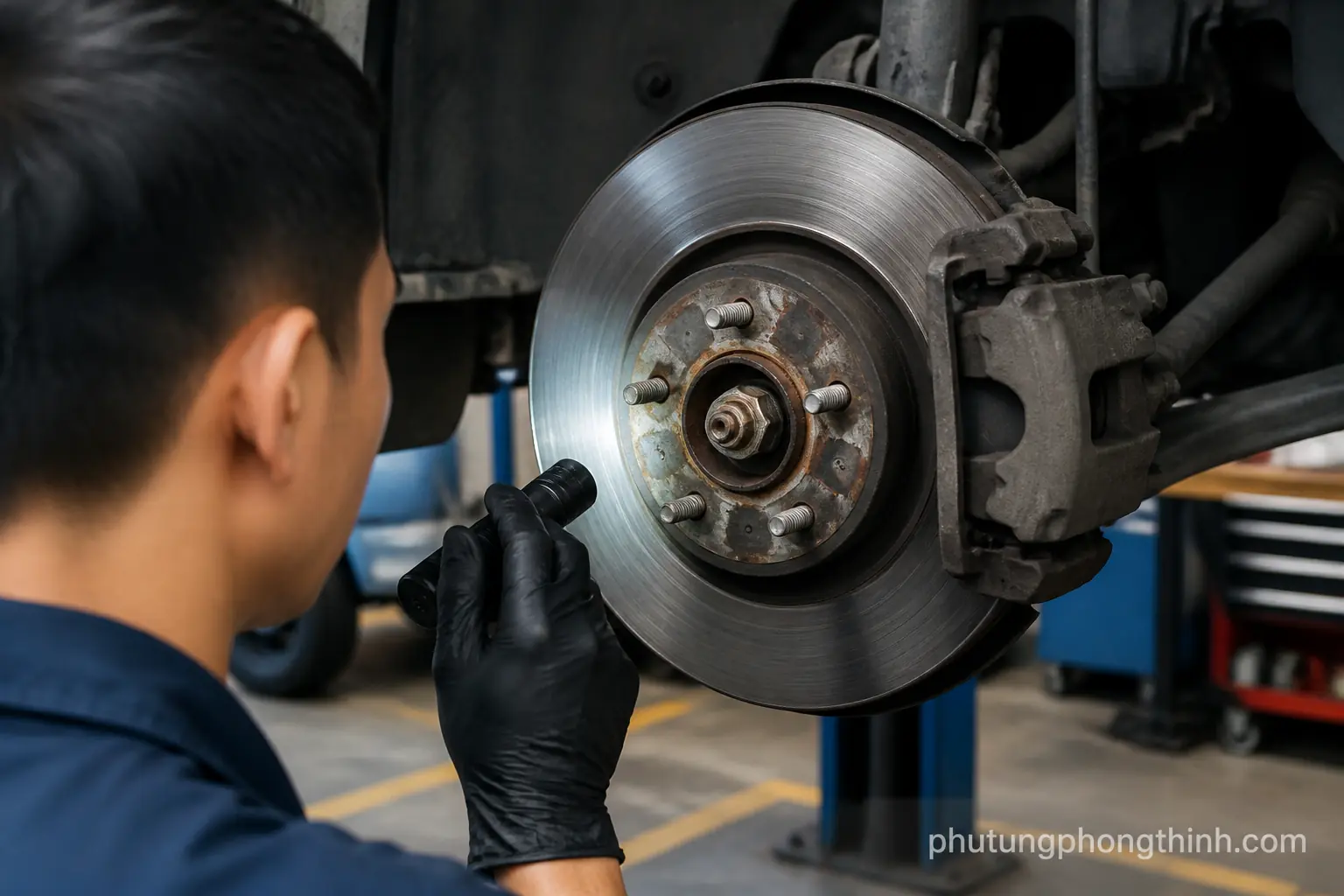
Visual clues can tell you a lot about the source of the drag. Inspect for uneven brake dust, one pad wearing much faster than the other, or a rotor with bluing or scoring. These sticking brake caliper symptoms often show up as tapered pad wear or a rotor that looks overheated, and fresh brake work followed by drag can point to an assembly or bedding issue.

Uneven wear at one corner usually points to caliper or slide-pin issues. Heat checking or discoloration suggests repeated overheating. If only one rear wheel is affected, parking brake components become more likely.
Check 3: Test Wheel Resistance and Caliper Movement
Safely raise the vehicle and spin the wheel by hand to feel for abnormal resistance. Compare the affected side with the opposite corner. A wheel that will not spin freely usually indicates a mechanical bind or a hydraulic hold.
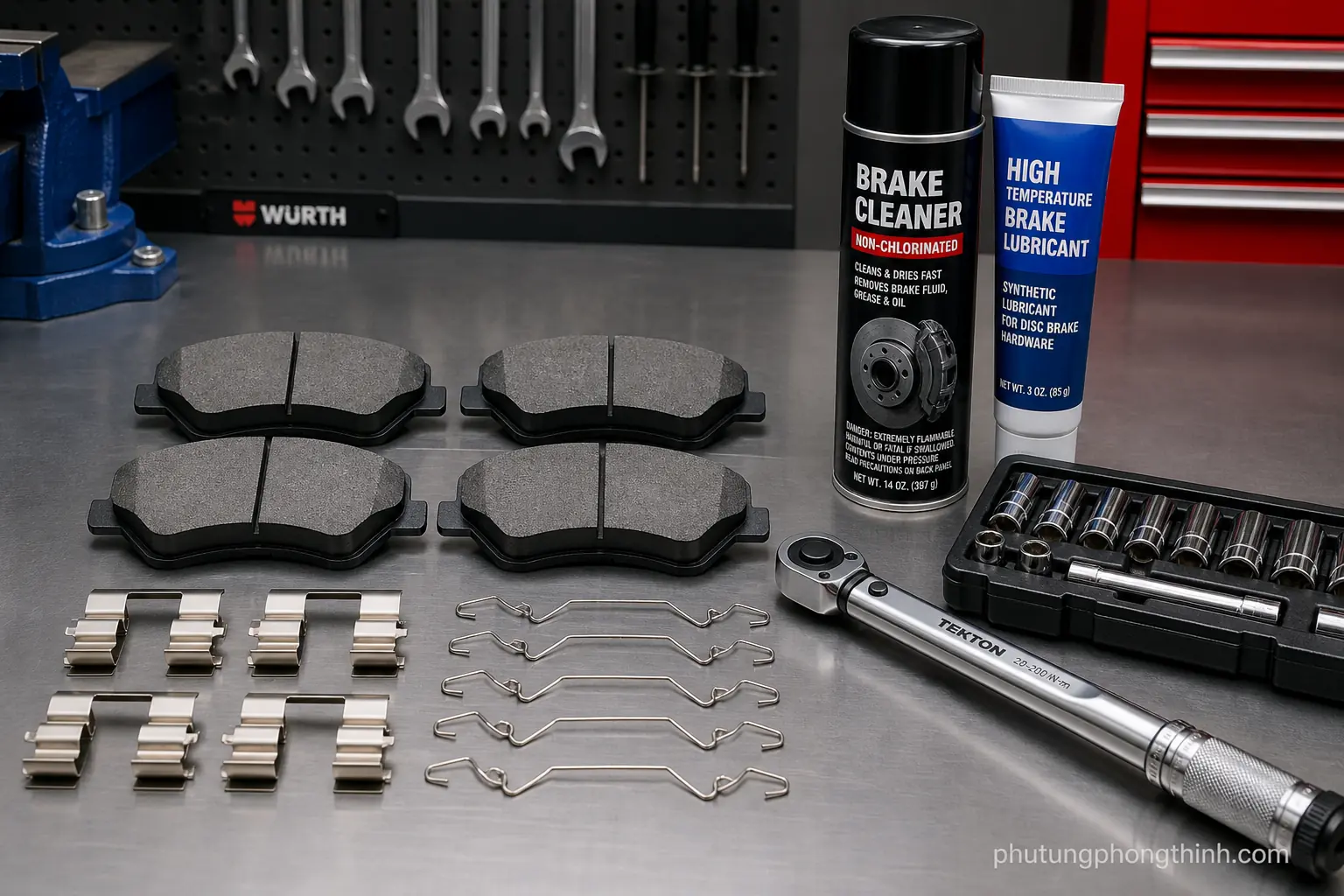
Next, inspect the caliper and slides. Check for seized slide pins, torn boots, and caliper brackets that do not move smoothly. When you test brake caliper slide pins, they should travel smoothly and be properly lubricated with high-temperature brake grease only on clean, serviced slide points.
Check 4: Rule Out Trapped Hydraulic Pressure
To tell whether pressure is being trapped in the brake circuit, open the bleeder screw carefully on the affected caliper and see whether the wheel frees up. If releasing pressure changes the drag, suspect a hose, master cylinder, or ABS-related restriction. This is different from a purely mechanical sticking caliper.
The most common pressure-related cause is an internally collapsed hose. It can act like a one-way valve, which is why people search for how to tell if a brake hose is collapsed. Any line or hose test should be followed by proper brake bleeding.
Check 5: Inspect the Parking Brake System
Rear brake drag often starts with the parking brake, so check whether the parking brake cable returns fully and is not seized or adjusted too tight. Inspect levers, shoes, and self-adjusters on rear brake setups. A parking brake won’t release symptom often shows up as rear-wheel heat and poor rolling.

- If only one rear wheel drags, the cable or hardware on that side may be binding.
- If both rear wheels drag, suspect cable routing, adjustment, or the pedal/lever mechanism.
- Rear brake drag causes often overlap with parking brake faults.
Check 6: Examine Recent Brake Work and Installation Mistakes
Brake drag after brake job is a strong clue, especially if the symptoms began right after service. Recheck pad fit, clip placement, rotor seating, caliper orientation, and hose routing. Contaminated parts, missing hardware, or over-tightened guides can create drag.
Use this step to decide whether cleaning slide pins is enough or whether a caliper, hose, or hardware set is needed. Warped parts are less common than binding parts in true drag cases. After any correction, repeat the temperature and wheel-spin test to confirm the repair.
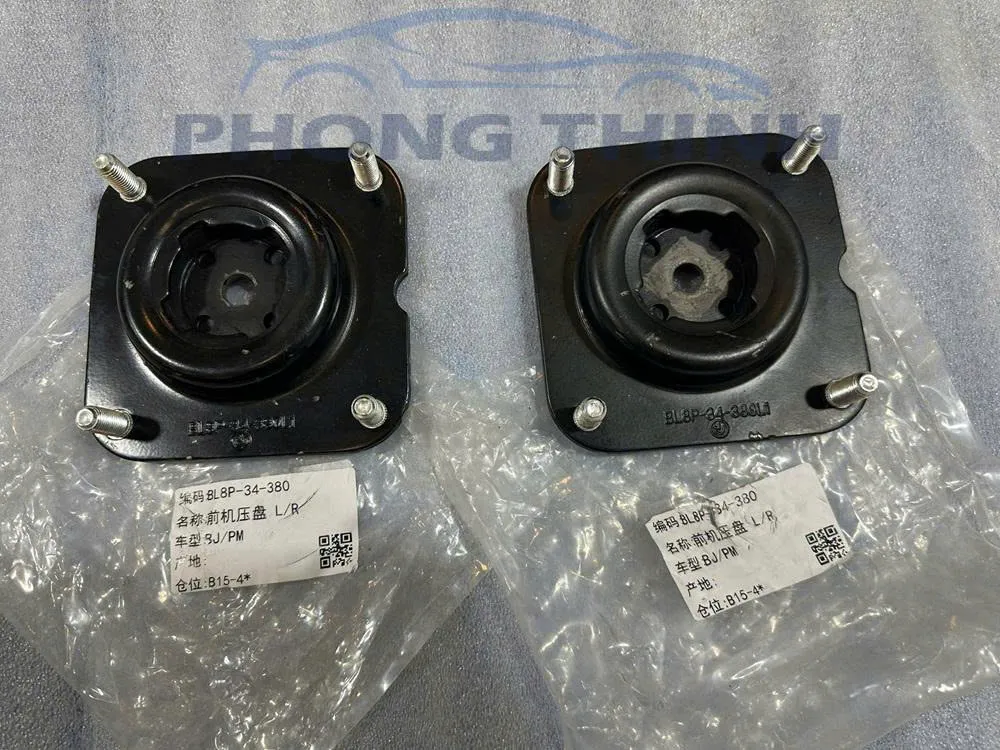
For some owners, a post-service issue leads them to look at nearby front-end components too, especially when noise or vibration appears at the same time, such as a front suspension mount.
Ford drivers checking the same kind of after-service concern may also compare notes against an OEM front strut mount if the symptoms include related front-end noise.
Check 7: Confirm the Fix and Road-Test Safely
After the repair, recheck wheel temperature after a short, controlled drive and repeat the wheel resistance test to confirm the wheel now spins normally. Listen for noise, feel for pulling, and verify the brake pedal returns normally.
If the problem comes back, the issue may be intermittent hydraulic pressure or a deeper ABS or master-cylinder fault. Do not keep driving with brake drag because it can damage pads, rotors, bearings, and fluid. If you still cannot isolate the source, professional diagnosis is the safest next step.
Brake Drag Diagnosis FAQ
Why is one wheel hotter than the others?
Usually, a single hot wheel means one corner is dragging more than the rest. That often points to a sticking caliper, seized slide pins, a collapsed hose, or parking brake hardware that is not releasing fully.
How do I tell if a brake hose is collapsed versus a sticking caliper?
If opening the bleeder screw frees the wheel, trapped hydraulic pressure is likely involved, which makes the hose or another hydraulic restriction more suspicious. If pressure release does not change much, the caliper or slide hardware is more likely binding.
What should I check after brake drag starts right after service?
Look at pad fit, clip placement, caliper orientation, rotor seating, hose routing, and any missing or contaminated hardware. Recent work makes installation mistakes and over-tightened guides much more likely.
Does rear brake drag usually mean the parking brake or the rear caliper?
It can be either, but the parking brake is a common place to start. If both rear wheels are affected, look at cable routing or adjustment; if only one rear wheel drags, that side’s cable, lever, or caliper hardware is the better place to inspect first.
Frequently Asked Questions
Why is one wheel hotter than the others?
Usually, a single hot wheel means one corner is dragging more than the rest. That often points to a sticking caliper, seized slide pins, a collapsed hose, or parking brake hardware that is not releasing fully.
How do I tell if a brake hose is collapsed versus a sticking caliper?
If opening the bleeder screw frees the wheel, trapped hydraulic pressure is likely involved, which makes the hose or another hydraulic restriction more suspicious. If pressure release does not change much, the caliper or slide hardware is more likely binding.
What should I check after brake drag starts right after service?
Look at pad fit, clip placement, caliper orientation, rotor seating, hose routing, and any missing or contaminated hardware. Recent work makes installation mistakes and over-tightened guides much more likely.
Does rear brake drag usually mean the parking brake or the rear caliper?
It can be either, but the parking brake is a common place to start. If both rear wheels are affected, look at cable routing or adjustment; if only one rear wheel drags, that side’s cable, lever, or caliper hardware is the better place to inspect first.