How to Diagnose ABS Hydraulic Control Unit Problems
How to Diagnose ABS Hydraulic Control Unit Problems
If you are learning how to diagnose abs hydraulic control unit issues, start by understanding what the unit actually does in the brake system. The ABS hydraulic control unit, often called the hydraulic modulator or ABS actuator assembly, manages brake pressure during anti-lock braking system events so the wheels can keep rotating instead of locking up.
Inside the assembly, the pump motor, solenoid valves, and internal passages all work together to route and release hydraulic pressure. When any of those parts fail, the result can be an ABS warning light, a hard pedal, brake pulsation, or false ABS activation that feels like the system is stepping in at the wrong time.
Check the Basics Before Testing the Hydraulic Modulator
- Inspect brake fluid condition and level for contamination, aeration, or low fluid.
- Check the ABS fuse and relay, battery voltage, and charging system health.
- Look for obvious wiring damage, loose connectors, or corrosion at the ABS unit.
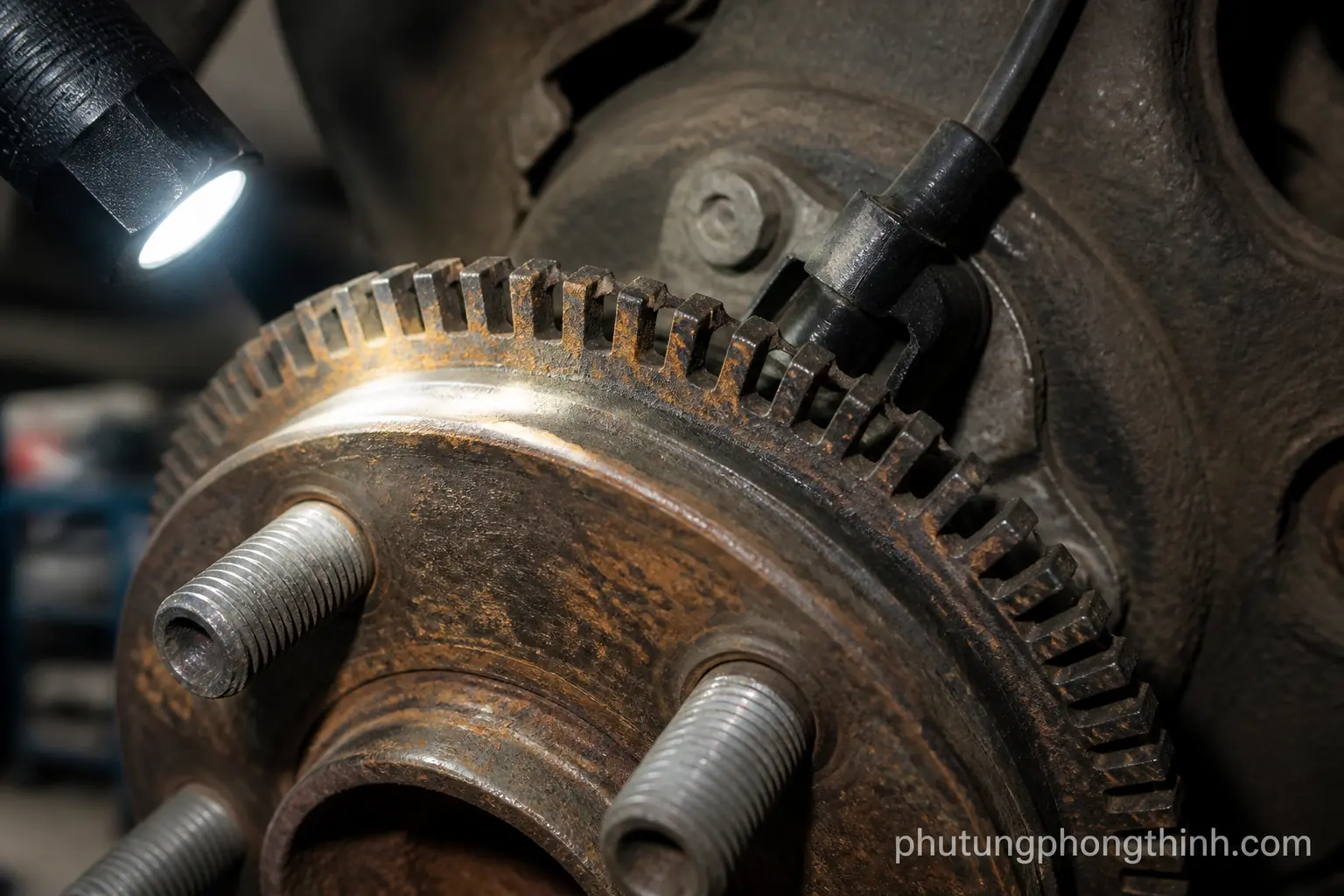
- Review wheel speed sensors and tone ring issues.
- Remember that bad sensor data can cause false ABS activation and misleading fault codes.
- Use this step to separate chassis and sensor problems from true hydraulic control unit issues.
Before you condemn the hydraulic modulator, rule out the simple causes that can mimic HCU failure. Brake fluid condition matters because dirty, aerated, or low fluid can affect pedal feel and create symptoms that look like internal hydraulic trouble. It is also smart to verify the ABS fuse and relay, battery voltage, and charging system health, because low supply voltage can make the system act erratically.
At the same time, inspect the ABS unit connector, wiring, and nearby harness for corrosion, bent terminals, or loose fits. Wheel-end faults can be just as misleading: a damaged tone ring or a noisy wheel speed sensor can trigger false ABS activation and send you chasing the wrong part. That is why the first pass should separate sensor and chassis problems from real hydraulic control unit issues.
Read ABS Fault Codes and Live Data

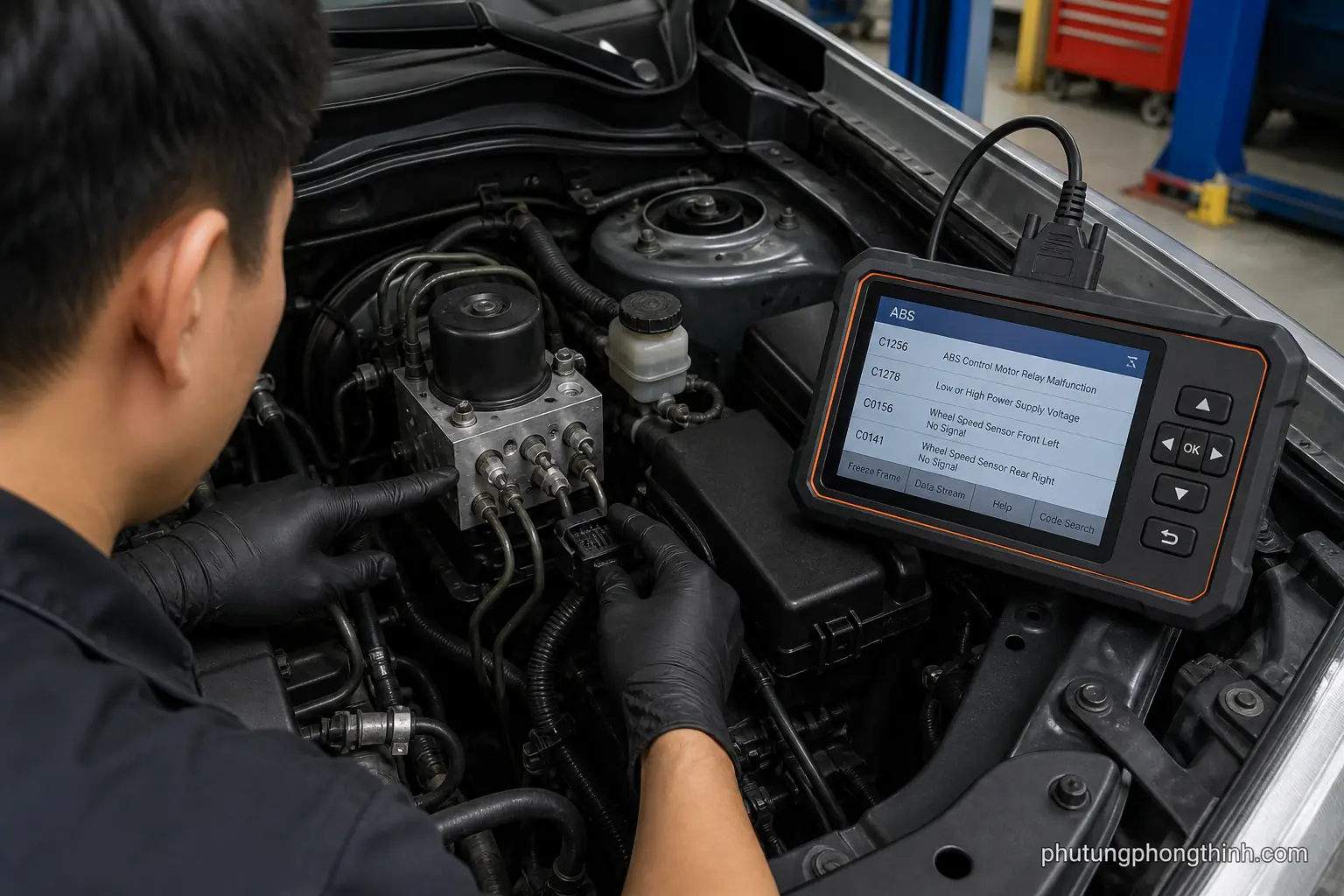
Use a scan tool to pull ABS fault codes and interpret them in context, not in isolation. An ABS code can point you toward the pump motor, a solenoid circuit, or a wheel speed input, but the code alone does not prove the hydraulic modulator has failed. Live data helps you see whether wheel speeds stay consistent, whether the pump motor is being commanded on, and whether valve activity matches what the module requests.
Bidirectional control is even more useful because it lets you run active tests on the pump motor and solenoid valves. During those tests, listen and feel for a response at the unit. If the module commands action but the hydraulics do not react as expected, that difference between commanded and actual behavior can help separate electrical control issues from a mechanical hydraulic failure.
Test Power, Ground, and Pump Motor Circuits

Electrical checks confirm whether the ABS unit can actually operate. Verify power and ground at the ABS connector under load, not just with a quick continuity check. Voltage drop testing, connector terminal inspection, and careful attention to corrosion or spread terminals often reveal problems that a basic resistance test will miss.
When service information allows it, test pump motor circuit resistance and current draw as part of ABS pump motor diagnosis. Open circuits, shorts, and high resistance can all keep the motor from running correctly. If the motor runs weakly, intermittently, or not at all, trace the result back to either the harness, the connector, or an internal HCU fault before making a replacement decision.
Evaluate Solenoid Valves and Internal Hydraulic Behavior

Once the electrical side checks out, focus on the hydraulic behavior inside the modulator. During bidirectional control, the solenoid valves should click or respond as commanded. If the valves do not react, or if they seem to stick, the unit may have an internal control problem, pressure hold issue, or release problem that affects brake feel and warning lights.
Contamination or internal sticking can create complaints that seem unrelated at first, including a hard pedal, inconsistent brake response, or warning lamps that return after clearing. In some cases the unit may be repairable, but often replacement is more realistic when the hydraulic section fails. If any hydraulic component work is done, proper bleeding is usually needed afterward, and it is worth verifying the fault carefully before replacing the ABS module.
When to Replace the ABS Hydraulic Control Unit
Replace the ABS hydraulic control unit only after the code, live data, electrical checks, and active tests all point in the same direction. An ABS warning light by itself is not enough, and neither is a generic fault code. You also want to confirm related systems such as wheel speed sensors and brake fluid condition before ordering parts, because those issues can create the same symptoms.
In some vehicles, a professional repair or dealer-level programming may be needed after replacement. Expect post-repair bleeding and a road test to confirm the fix. Careful diagnosis saves time, money, and repeated comebacks because it prevents unnecessary parts replacement.
Related Steering Issues That Can Confuse ABS Diagnosis
Steering looseness or vibration can make brake and ABS complaints feel worse during a road test, even when the hydraulic control unit is not the real cause. If the front end is unstable, the driver may notice noise, wander, or braking hesitation that blurs the symptom picture and makes the ABS problem harder to isolate.
That is why it helps to inspect the broader front-end condition while you are confirming the fault. Worn inner tie rod wear or outer tie rod play can add enough instability to distract from the real brake issue during testing.
Frequently Asked Questions
What are the most common signs of an ABS hydraulic control unit problem?
Common signs include an ABS warning light, abnormal brake pulsation, a hard or inconsistent pedal, false ABS activation, and fault codes related to the pump motor or solenoid valves. Those symptoms should be confirmed with live data and electrical testing before replacing parts.
Can a bad wheel speed sensor look like an ABS hydraulic control unit failure?
Yes. Incorrect wheel speed data can trigger ABS operation at the wrong time and set misleading fault codes. That is why wheel speed sensor and tone ring checks should come before condemning the hydraulic control unit.
How do you test an ABS pump motor?
Check power and ground at the connector under load, then follow service information for resistance or current draw testing. Use scan-tool active tests to command the pump and verify whether it runs strongly and consistently.
Do you need to bleed the brakes after replacing the ABS hydraulic control unit?
Usually yes. Many ABS repairs require a proper bleed procedure to remove trapped air from the hydraulic unit and brake lines. Some systems also need a scan tool bleed function after the repair.
Can the ABS module be the problem even if the pump still runs?
Yes. A pump that runs does not rule out sticking solenoids, pressure control issues, or internal hydraulic problems. You need fault codes, live data, and active tests together to make the call.