How to Check Brake Fluid Contamination: 7 Clear Signs
How to Check Brake Fluid Contamination: Start With the Basics
If you want to know how to check brake fluid contamination, start with the simplest signs first. Brake fluid is hygroscopic brake fluid, which means it naturally absorbs moisture over time, and that moisture can reduce braking performance and speed up internal corrosion. Contamination can also come from debris, degraded fluid, or the wrong brake fluid, all of which can affect brake safety and wear on hydraulic parts.
Begin with a quick look at the reservoir level, the fluid appearance, and the vehicle’s service history. This guide focuses on visual inspection, pedal feel, and a brake fluid moisture tester, since those checks together give a clearer picture than any single clue. If the fluid looks bad, the pedal feels off, or the results point to high moisture content, a flush or mechanic inspection may be the safest next step.
7 Clear Signs Your Brake Fluid Is Bad
- Dark brown fluid that has lost its clear, light color.
- Cloudy fluid that may point to moisture or contamination.
- Visible particles, sediment, or sludge in the reservoir.
- A soft brake pedal or spongy pedal feel.
- A brake fluid moisture test that shows high moisture content.
- Longer stopping distances, delayed response, or inconsistent braking.
How to Inspect Brake Fluid Visually
To inspect brake fluid visually, locate the reservoir and look at the fluid against a light background. Clean brake fluid should usually look fairly clear or lightly amber, while cloudy fluid or dark brown fluid suggests age, moisture, or contamination. Also check for visible particles, discoloration, and whether the fluid level seems lower than expected. A dirty reservoir cap or grime around the opening can be another clue that the system needs attention.
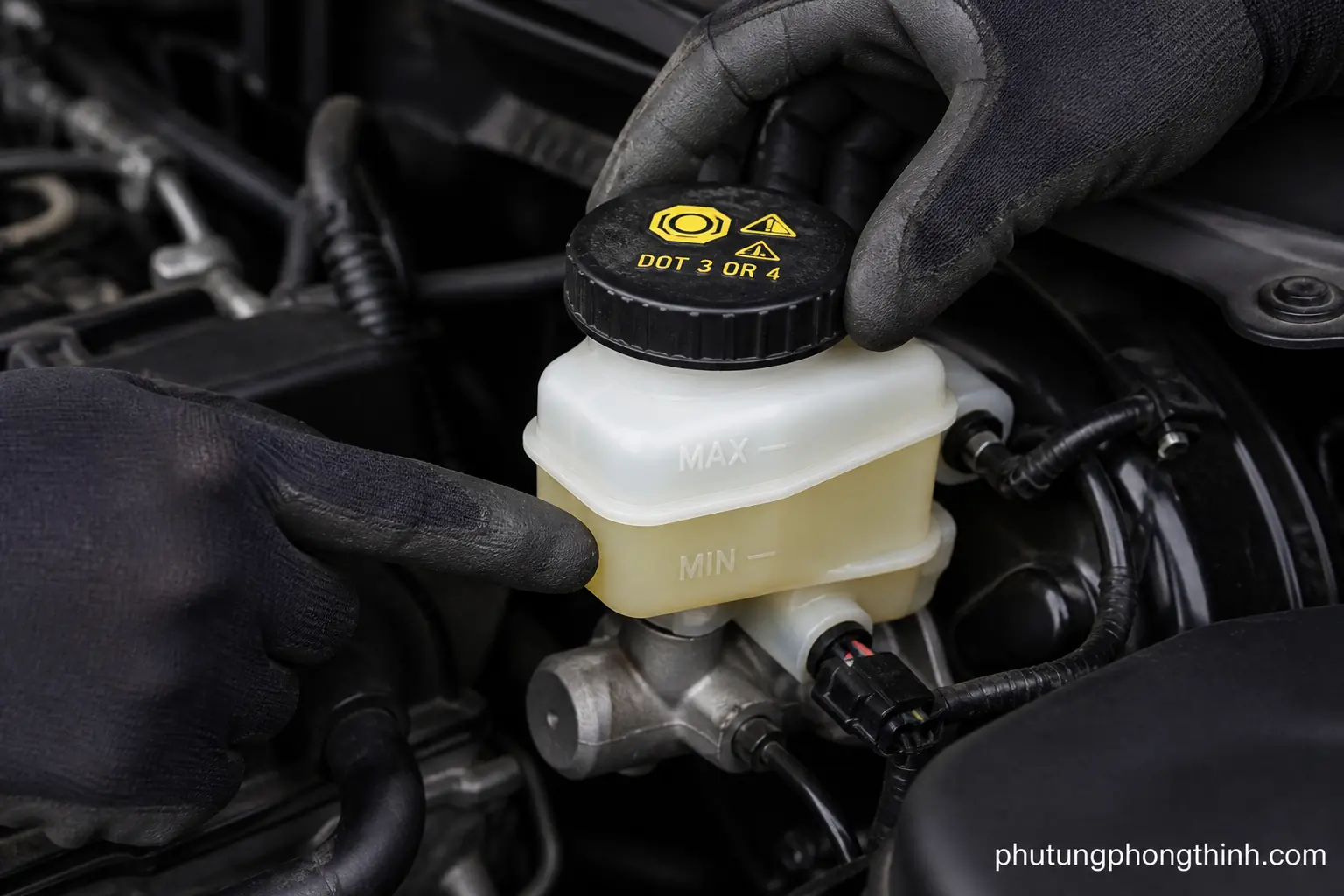
A visual check is helpful, but it cannot measure moisture content. Brake fluid can still look acceptable while being degraded internally, especially if it has absorbed water over time. If the result is unclear, pair the inspection with a tester or have the system checked professionally.
Use a Brake Fluid Tester to Check Moisture Content
A brake fluid tester gives you a better answer than color alone by checking moisture content directly. In simple terms, the tester samples the fluid from the reservoir and estimates how much water has entered the system. The goal is to measure contamination, not just judge appearance, because fluid can look normal and still need service. If the reading is high, the fluid should be serviced soon.

Elevated moisture lowers the boiling point and increases braking risk, especially under hard use or in heat. If the tester shows excessive moisture, a brake fluid flush is usually the right next step. For the best read, combine the tester result with the visual condition of the fluid and any changes in pedal feel.
What Pedal Feel Can Tell You About Contamination
A soft brake pedal or spongy pedal can be a strong warning sign that something is wrong in the hydraulic system. Contaminated fluid can create symptoms that feel similar to air in brake lines, including delayed response, inconsistent braking, or a pedal that does not feel firm right away. If stopping distances seem longer than normal, the system deserves attention.

Pedal feel alone cannot confirm contaminated fluid, because other brake system problems can cause similar symptoms. Still, if the pedal changes suddenly or keeps getting worse, it is safer to treat that as a real warning and inspect the system right away.
Wrong Brake Fluid and Other Contamination Causes
One of the most serious issues is what happens if wrong brake fluid is added. Mixing incompatible hydraulic fluid can damage seals, change brake performance, or create internal problems that are not obvious at first. Moisture intrusion, dirt introduced during topping off, and skipped maintenance can also make fluid unsafe even if the reservoir does not look terrible.
When contamination is significant, the problem may go beyond the reservoir and affect lines, calipers, or the master cylinder. In that case, a full brake fluid flush and system inspection may be needed. If the wrong fluid was added or the symptoms are severe, professional help is the safest choice, and the same level of care applies when replacing a related component like the right control module in a vehicle system that needs precise operation.
When to Flush Brake Fluid or Get an Inspection
- Schedule a brake fluid flush if moisture is high, the fluid is dark, or particles are present.
- Get an inspection if the brake pedal feels soft, spongy, or inconsistent.
- Remember that service intervals depend on the vehicle and driving conditions.
- Use the question of how often to change brake fluid as part of your regular brake maintenance plan.
Brake safety depends on healthy hydraulic fluid, so it is better to act early than wait for performance to get worse. Follow the manufacturer’s maintenance schedule, and if your brake checks happen alongside other upkeep, it can be a good time to review related items such as a front suspension spring pad as part of overall vehicle care.
Frequently Asked Questions
How often should brake fluid be checked for contamination?
Brake fluid should be checked during regular maintenance and any time braking feel changes. Many drivers inspect it at least once a year, but harsh driving, heavy towing, or older vehicles may need more frequent checks. Always follow the manufacturer’s schedule.
Can brake fluid look fine and still be contaminated?
Yes. Brake fluid can appear clear while still holding too much moisture or having internal degradation. That is why a visual check should be paired with pedal feel and, when possible, a brake fluid tester.
What color should healthy brake fluid be?
Healthy brake fluid is usually clear to light amber. Dark brown fluid, cloudy fluid, or fluid with particles often suggests age, contamination, or moisture buildup.
Is a soft brake pedal always caused by bad brake fluid?
No. A soft or spongy pedal can also come from air in the brake lines, worn components, or leaks. It is a warning sign, but not a final diagnosis on its own.
What should I do if the wrong brake fluid was added?
Do not keep driving if you suspect the wrong fluid was added. Have the system inspected as soon as possible, because incompatible fluid can damage seals and affect braking performance. In many cases, the system may need a full flush.