Brake Booster Vacuum Leak Symptoms: 6 Tests That Confirm It
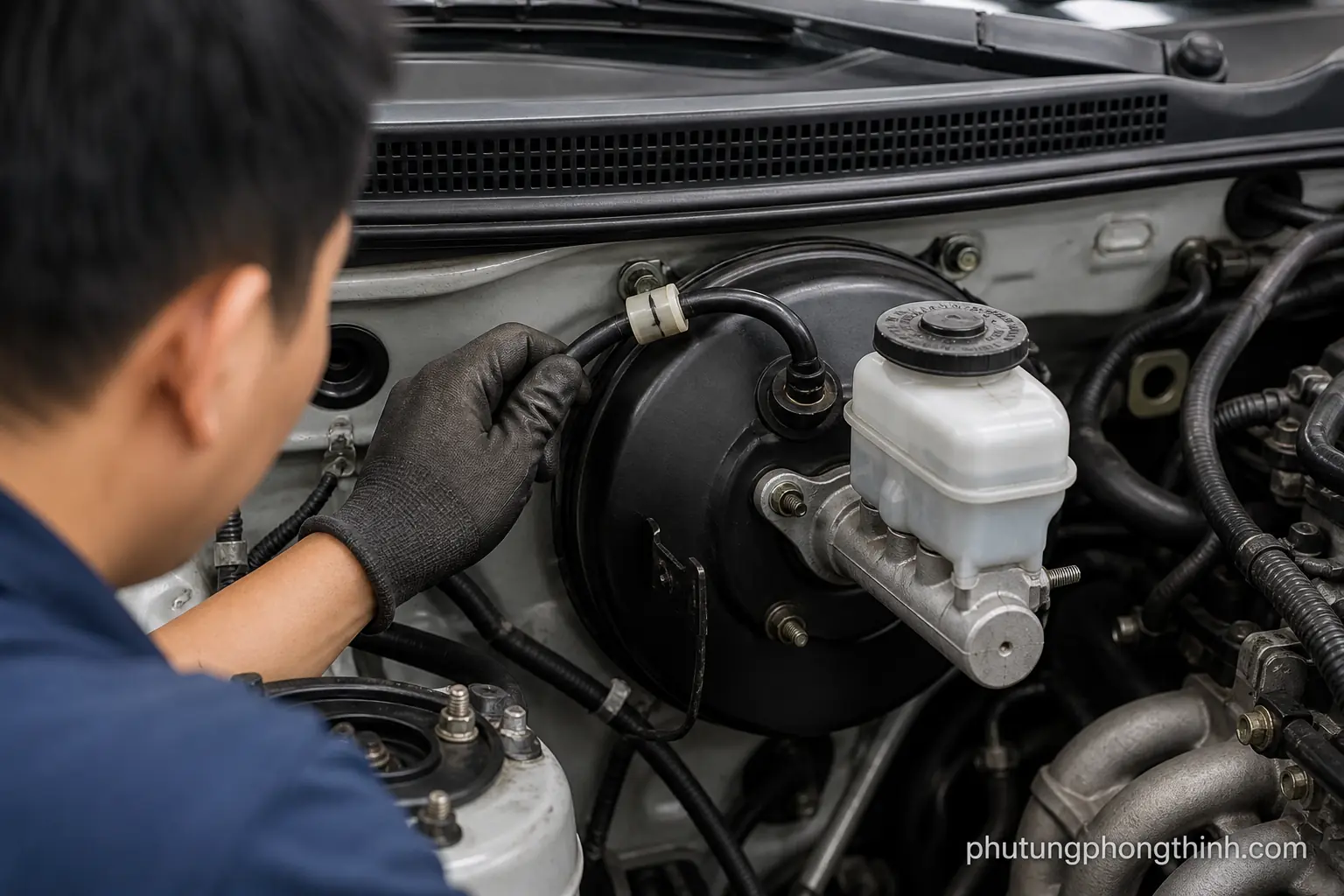
Brake booster vacuum leak symptoms: what to notice first
If you are checking brake booster vacuum leak symptoms, the first clues usually show up as a hard brake pedal, a hissing sound, and a change in how the pedal feels when you press it. In some cases, the engine idle changes too, especially if the vacuum leak is large enough to disturb the vacuum supply. Those signs can point to a brake booster problem, but they can also overlap with other vacuum hose or engine issues, which is why simple tests matter before you decide on a repair.
How a brake booster vacuum system works
A brake booster uses engine vacuum to create brake assist, reducing the effort needed to stop the vehicle. Vacuum travels from the engine through a vacuum hose to the booster, and a one-way check valve helps hold reserve vacuum when the engine is off or when vacuum drops. The booster itself is mounted at the firewall, where it multiplies pedal force by using that stored vacuum on one side of its internal diaphragm.
6 tests that confirm a brake booster vacuum leak
The quickest way to confirm the problem is to use a few simple checks instead of relying on one symptom alone. Start with listening tests, then compare pedal feel with the engine off and running, and finish with reserve vacuum and hose checks. When several tests point the same way, you have a much better case for a brake booster vacuum leak than you would from a single clue.
- Listen for hissing at the booster area.
- Compare pedal effort with the engine off and on.
- Do a brief pedal drop test at idle.
- Inspect the vacuum hose and fittings.
- Test the one-way check valve.
- Watch for idle changes when braking.
Listen for a hissing sound near the pedal or firewall
A vacuum leak hiss is often easiest to hear near the brake pedal area or along the firewall where the booster sits. The sound may get louder or softer as you press and release the pedal, because movement can change how air escapes. If the hiss is steady and clearly tied to the booster area, that often suggests a diaphragm or seal problem inside the unit.
Check for a hard brake pedal with the engine off and on
With the engine off, the pedal should feel harder after a few presses because reserve vacuum gets used up. That part is normal. What is not normal is a pedal that stays unusually stiff even with the engine running, because that suggests brake assist is not being delivered the way it should.
Perform the pedal drop test
To do a basic brake booster test, start the engine and press the brake pedal lightly at idle. You should usually feel a slight pedal drop as vacuum assist engages. If there is no drop at all, that points toward lost vacuum assist, a leak, or a failed booster rather than normal pedal feel.

Inspect the vacuum hose and fittings
Before assuming the booster has failed, inspect the vacuum hose for cracks, soft spots, loose clamps, and oil contamination. Check the connections at the intake manifold, the check valve, and the booster grommet. A damaged hose can create the same symptoms as bad brake booster check valve symptoms, so the visible parts are worth checking closely.

Test the one-way check valve
The check valve should allow air flow in only one direction, so a simple flow-direction test can show whether it is holding reserve vacuum correctly. If the valve fails, vacuum bleeds away too quickly after shutdown and the pedal can go hard much sooner than expected. That fast change in pedal feel after the engine is turned off is a common clue that the valve is not doing its job.
Watch for engine idle changes
When a vacuum leak affects the booster circuit, the engine may show a rough idle or a small idle surge. These changes are most useful when they happen right as you apply the brake, because that ties the symptom to the brake vacuum supply. Even so, idle behavior should support the diagnosis, not replace direct checks of the booster and hose.
When the symptoms point to replacement instead of repair
If the hose and check valve test out but the symptoms keep returning, the booster itself is often the part that needs replacement. Common brake booster replacement signs include a persistent hiss, weak brake assist, and a failed pedal drop test. Because any loss of brake assist affects stopping power, it should always be treated as a safety issue, not a nuisance.
When the diagnosis has moved beyond simple repair, choosing the right replacement electrical module such as replacement electrical module depends on confirming that the brake booster side of the system is truly at fault first.
- Replace the booster if the hiss and poor assist remain after hose and valve checks.
- Replace the check valve if it will not hold reserve vacuum.
- Replace a damaged vacuum hose if it is cracked, soft, or leaking.
- Do not keep driving if brake effort has become unsafe.
How to avoid misdiagnosing a brake booster vacuum leak
The biggest mistake is confusing a booster vacuum leak with an engine-only vacuum problem. A weak engine, intake leak, or unrelated sensor issue can also change idle quality and make the vehicle feel wrong without the booster being the root cause. That is why it pays to confirm the leak source before buying parts, especially when symptoms seem to point in more than one direction.
It is also easy to blame the wrong component when the real problem is elsewhere in the system. For example, a fuel system replacement part like fuel system replacement part would not fix a brake booster issue if the leak is actually in the vacuum hose or check valve.
- Separate brake assist problems from general engine vacuum leaks.
- Check whether idle changes happen only when braking.
- Inspect the hose, valve, and booster before replacing parts.
- Confirm the diagnosis with more than one test.
FAQ: brake booster vacuum leak symptoms and tests
Here are a few quick answers to the most common follow-up questions after checking brake booster vacuum leak symptoms.
Frequently Asked Questions
How do I test a brake booster in a driveway?
Start the engine, press and release the brake a few times, then hold light pressure on the pedal. A healthy booster usually gives a slight pedal drop when vacuum assist engages. You can also shut the engine off and see whether the pedal firms up after the reserve vacuum is used. If the pedal never changes as expected, the booster, hose, or check valve may be leaking.
How long should reserve vacuum last after shutdown?
Reserve vacuum should last long enough to give you at least a few assisted brake applications after the engine is turned off. If the pedal goes hard almost immediately, that suggests the check valve may be leaking or the booster is losing vacuum too fast. Exact hold time varies by vehicle, but a very quick loss of assist is not normal.
Can a bad check valve cause a hard brake pedal without a bad booster?
Yes. A failing one-way check valve can let vacuum escape after shutdown, which removes reserve vacuum and makes the pedal hard sooner than it should. That can happen even if the booster diaphragm itself is still intact. It is one of the first parts to test before replacing the whole booster.
Is it safe to keep driving with brake booster vacuum leak symptoms?
If the brake pedal is only slightly different, you may still have some assist, but any noticeable loss of brake assist is a safety concern. A pedal that is very hard, requires extra force, or changes unpredictably means you should limit driving and inspect the system as soon as possible. If stopping distance has changed, do not keep driving normally.
What is the difference between a vacuum hose leak and a booster leak?
A vacuum hose leak usually comes from a crack, loose connection, or damaged grommet in the hose path between the engine and booster. A booster leak usually comes from the booster housing or internal seal area at the firewall. Both can cause hissing, hard pedal feel, and idle changes, so testing the hose, valve, and booster separately is the best way to tell them apart.