How to Fix a Coolant Leak: 7 Common Repairs
How to fix a coolant leak: start with symptoms and a pressure test
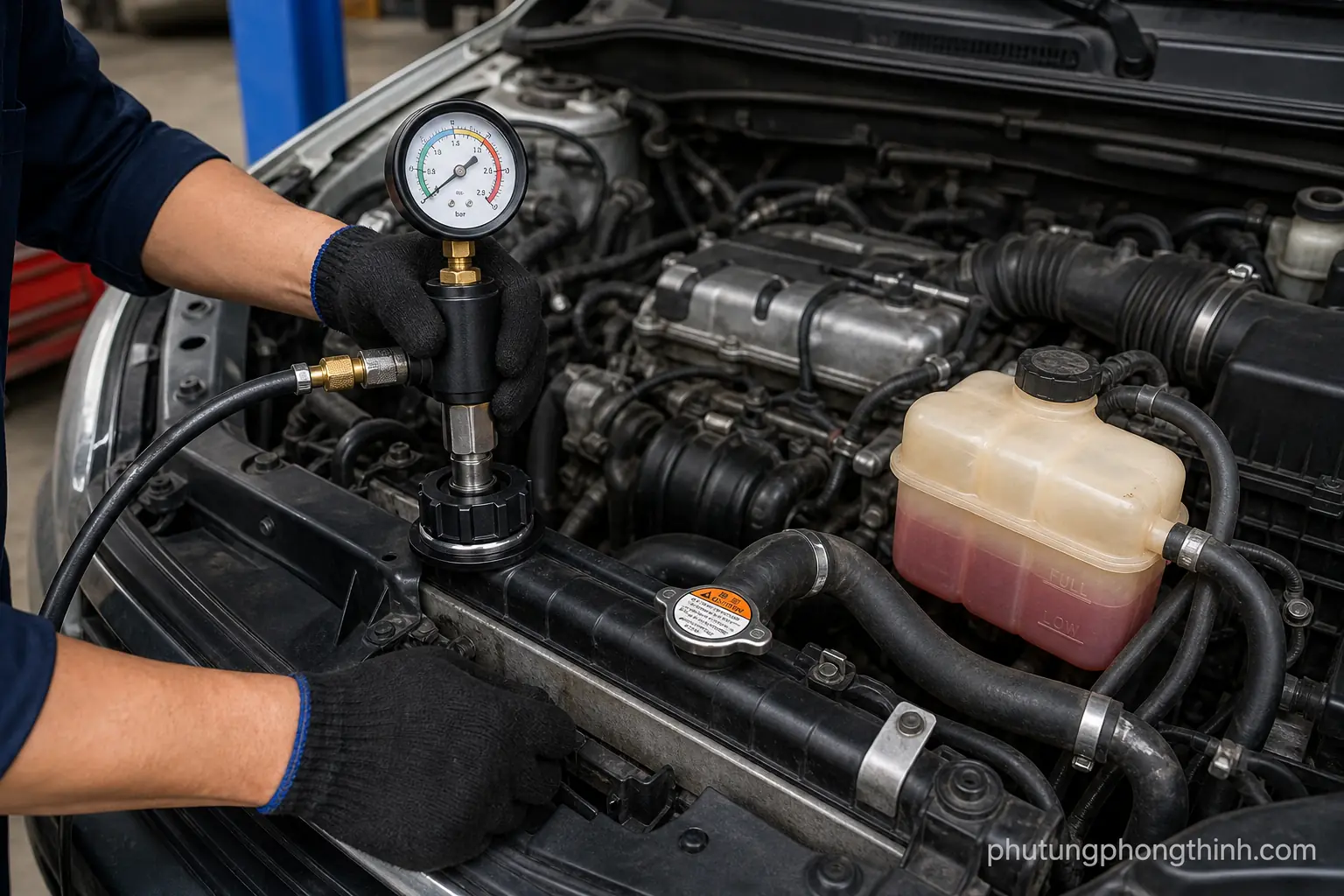
If you are trying to learn how to fix a coolant leak, start by confirming the problem before replacing parts. Common coolant leak symptoms include puddles under the car, a sweet smell, low coolant, steam, an overheating engine, or a temperature gauge that keeps climbing. A leak can be external or internal, so diagnosis comes first. The fastest way to locate the source is often a pressure test, and the first places to inspect are the radiator cap, coolant reservoir, radiator hoses, and any visible fittings.
Inspect the most common external leak points

Start with the obvious leak points and work outward from there. Check the radiator hoses for splits, swelling, soft spots, and wet ends where they meet the fittings. Look closely at hose clamps for looseness, corrosion, or a poor seal. Inspect the coolant reservoir for cracks along the seams, then examine the radiator, drain plug, thermostat housing, and any O-ring areas for fresh coolant residue. A careful visual inspection can save you from replacing the wrong part.
- Radiator hoses for cracks, bulges, or damp connections
- Hose clamps that are loose, rusty, or misaligned
- Coolant reservoir seams and mounting points
- Radiator, drain plug, thermostat housing, and O-ring sealing surfaces
7 common coolant leak repairs that actually solve the problem
Once you know where the leak is coming from, the repair usually falls into one of a few common fixes. A cracked hose needs replacement, not sealant. A weak clamp may only need tightening, but many clamps are better replaced if they no longer hold evenly. If the radiator cap cannot hold pressure, install a new one. Leaks at the thermostat housing often mean a failed gasket or O-ring. A damaged coolant reservoir usually has to be replaced. If coolant is escaping from the water pump weep hole or shaft seal, the pump itself is typically the fix. And if cabin symptoms point to a heater core issue, the repair may be inside the vehicle rather than at the engine.
- Replace cracked radiator hoses
- Tighten or replace failing hose clamps
- Install a new radiator cap if it cannot hold pressure
- Replace a damaged thermostat housing gasket or O-ring
- Repair or replace a leaking coolant reservoir
- Address a water pump leak from the weep hole or shaft seal
- Check whether heater core symptoms point to an internal leak
When the leak is internal or hard to reach
Some coolant leaks are harder to see because they show up inside the cabin or inside the engine. A leaking heater core often causes foggy windows, damp carpets, and a sweet odor in the cabin. Internal coolant loss can also point to head gasket trouble or other engine cooling problems. If the water pump is seeping, that usually means replacement rather than a patch. When the leak cannot be isolated, keeps returning, or is buried in a hard-to-reach spot, it is usually time for professional help and a more complete diagnosis. In some cases, a matching replacement antenna base or other model-specific part may be part of the larger repair plan for the vehicle.
For some vehicles, a replacement antenna base is one of the specific components that gets replaced when access or body-mounted parts are involved in a broader service.
Refill, bleed the cooling system, and verify the repair

After the repair, refill the system with the correct coolant mix for your vehicle. Then bleed the cooling system so trapped air does not cause overheating or poor circulation. Once the engine is warm, check again for leaks at idle and after a short test drive. Keep an eye on the coolant level and temperature over the next few trips to make sure the repair holds.
- Refill with the correct coolant mix
- Bleed air from the system to prevent overheating and poor circulation
- Check for leaks again at idle and after a short test drive
- Monitor coolant level and temperature over the next few trips
When to stop driving and get help
Stop driving if the engine is overheating or the coolant level is dropping quickly. Repeated overheating can damage the engine, so it is not worth pushing your luck. If you suspect a head gasket problem, a severe water pump failure, or a heater core issue, towing or professional diagnosis is the safer choice. When the cooling system leak is beyond a simple external repair, getting help early can prevent much bigger damage.
- Stop driving if the engine is overheating or coolant is disappearing quickly
- Repeated overheating can damage the engine
- Tow or get professional diagnosis for suspected head gasket, severe water pump, or heater core issues
If you have done the diagnosis, completed the repair, and confirmed the cooling system stays full, the last step is simply to monitor it for a few drives and keep an eye out for any new coolant leak symptoms. If a related vehicle-specific part is needed, a model-specific mounting part can be one more piece of the overall repair process.
Questions fréquentes
How do I know if my car is losing coolant or just overheating from another cause?
If the coolant level keeps dropping, you see puddles, smell a sweet odor, or notice steam from the engine bay, you likely have a coolant leak. Overheating without coolant loss can point to other issues, but a leak is one of the first things to rule out.
Can I drive with a small coolant leak?
It is risky. Even a small leak can turn into an overheating problem if the level drops enough or air gets into the system. Check the level often and avoid driving if the temperature starts rising.
What is the best way to find a hard-to-see coolant leak?
A pressure test is usually the fastest method. It forces coolant out of the weak point so you can inspect hoses, clamps, the radiator cap, the reservoir, thermostat housing, and other fittings more easily.
Do I need to bleed the cooling system after adding coolant?
Yes, if air entered the system during the repair or refill. Trapped air can reduce circulation and cause overheating, so bleeding the system is an important finishing step.
When does a coolant leak mean the water pump needs replacement?
If coolant is coming from the water pump weep hole or the shaft seal area, replacement is usually the correct fix. Those leaks rarely improve with a temporary patch.