How to Diagnose Cooling Fan Problems: 7 DIY Tests
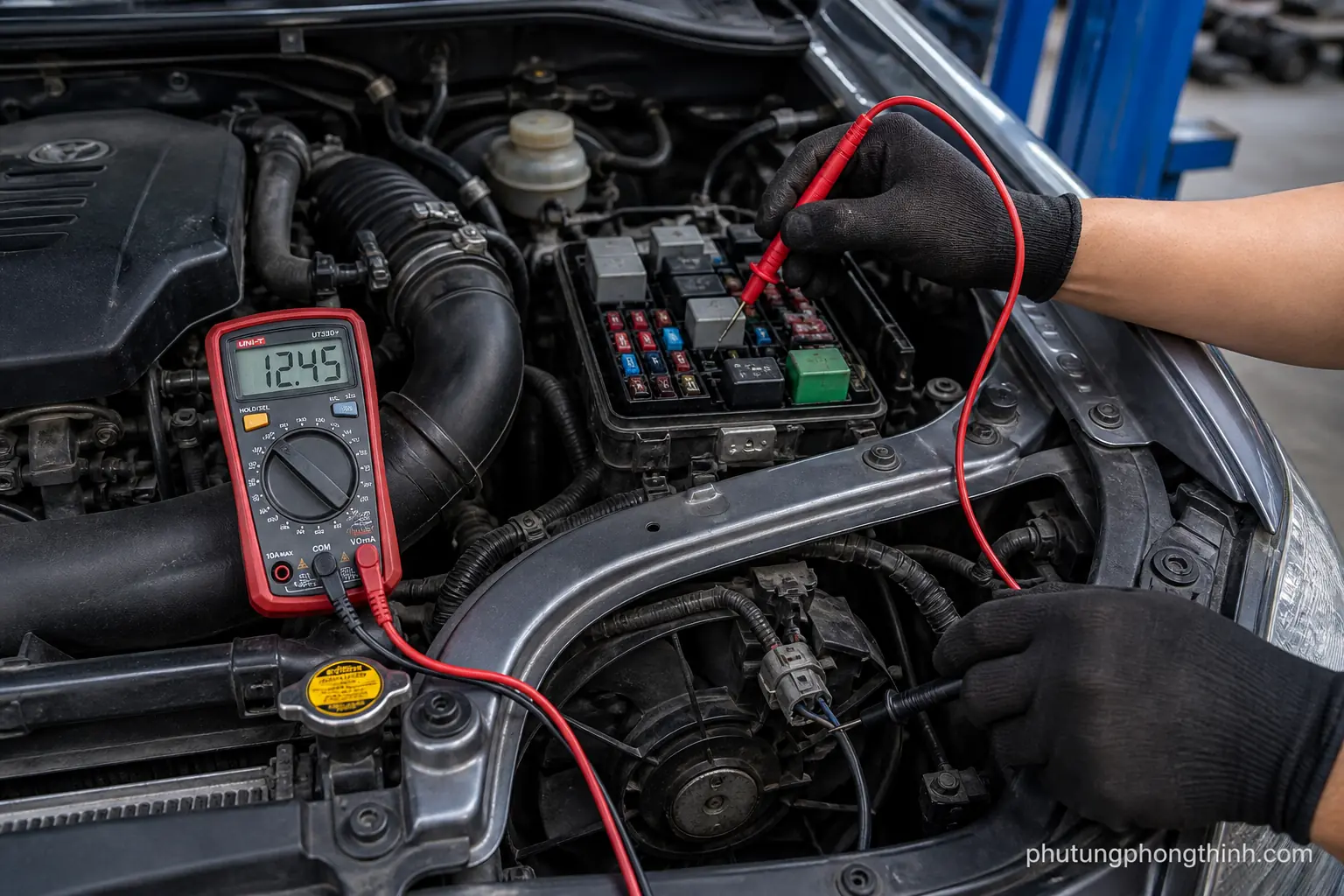
How to Diagnose Cooling Fan Problems: Start with the Symptom
If you’re learning how to diagnose cooling fan problems, start by matching the symptom before you replace anything. A radiator fan that never comes on, runs intermittently, makes loud noise, or only acts up when the car is idling can point to very different faults. The goal of these DIY tests is to narrow the problem to the power supply, control signal, wiring, or fan motor so you can avoid guessing and buying the wrong part.
Test 1: Check the Fuse and Power Feed
Begin with the cooling fan fuse and make sure the fan has battery voltage available. A blown element, heat damage, or a weak connection in the fuse box can stop the circuit before it ever reaches the fan. Testing both sides of the fuse with a multimeter or test light tells you whether power is actually passing through.
- Locate the cooling fan fuse and inspect it closely for a broken link or signs of overheating.
- Probe both sides of the fuse to confirm battery voltage is present.
- If the fuse keeps blowing, suspect a shorted wire, seized fan motor, or internal circuit fault.

Test 2: Check the Fan Relay and Control Signal
The relay is the switch that lets the engine computer command the radiator fan on and off, so a bad relay can look exactly like a failed fan motor. If you have an identical relay nearby, a quick swap test can help confirm the fault. You can also check whether the control side is receiving a signal from the engine computer or temperature switch when the fan should come on.
- Understand that the relay may be the only thing keeping power from reaching the fan.
- Try a relay swap or activation test if the same type is available.
- Verify the control signal before assuming the fan itself is bad.
Test 3: Verify the Engine Coolant Temperature Sensor Input
A faulty engine coolant temperature sensor can delay fan engagement or prevent it entirely, even when the engine is hot. An OBD2 scan tool is the easiest way to compare live coolant temperature data with what you expect from a cold engine and normal operating temperature. If the readings are unrealistic, the car may be getting the wrong command for fan operation.
Common signs include erratic gauge behavior, weak fan control, or overheating at idle when airflow is already limited. If the sensor input is wrong, the cooling fan diagnosis needs to focus on the signal first, not just the fan hardware.
Test 4: Inspect Wiring, Ground Circuit, and Connectors
Once power and control are checked, inspect the wiring between the relay and fan. Melted connectors, corrosion, loose pins, and damaged insulation near the fan shroud are common causes of voltage drop and intermittent failure. A weak ground circuit can stop the fan motor even when power is present at the connector, so don’t overlook the return path.
- Inspect the fan connector and nearby harness for heat damage or corrosion.
- Check the ground circuit for looseness or excessive resistance.
- Wiggle the harness while watching for intermittent fan operation or voltage changes.
In some cases, low system voltage can make the fault look like a fan problem when the real issue is charging performance. If you’re chasing electrical supply issues, stable charging voltage matters just as much as the fan circuit itself.
Test 5: Bench-Test the Fan Motor
If the circuit checks out, test the fan motor directly with jumper wires and fused battery power. A healthy motor should start promptly, run smoothly, and draw reasonable current without excess noise. If it runs slowly, sounds rough, or fails to start, the fan assembly is likely worn out.
- Apply fused battery power directly to the fan motor.
- Watch for a quick, smooth start and steady operation.
- Replace the fan assembly if the motor is slow, noisy, or dead.

Test 6: Check Dual-Fan Systems and Two-Speed Fan Operation
Dual-fan systems can be more complicated because they may use separate relays, resistors, or control paths for different speeds. On a two-speed fan setup, one speed can fail while the other still works, which makes the problem easy to miss. A vehicle with one working fan does not automatically mean the whole cooling fan system is healthy.
- Identify whether the vehicle uses dual-fan systems or a two-speed fan strategy.
- Test both low-speed and high-speed operation separately.
- Check the related relay or resistor path for the failed speed.
Test 7: Confirm the Cause Before Replacing Parts
By the end of these seven tests, you should have a clear path to the failed part: fuse, relay, sensor, wiring, ground, or fan motor. That also helps you tell the difference between a true fan circuit failure and an engine overheating at idle problem caused by another condition. Replace only the part the tests point to, and make sure the charging system and electrical basics are sound before you spend money.
- Use the test results to isolate the exact fault instead of guessing.
- Confirm whether the issue is fan-related or part of a broader overheating diagnosis.
- Check for underlying electrical problems before installing new parts.
For routine maintenance that supports the bigger picture, a proper oil service part can be part of keeping the engine in good condition over time.
Common Questions About Cooling Fan Diagnosis
Here are the questions that come up most often after a basic cooling fan diagnosis.
If the radiator fan is not coming on even though the engine is hot, the most likely causes are a blown fuse, bad relay, sensor input issue, wiring fault, or failed fan motor. The fastest way to narrow it down is to check power, control, and the motor directly in that order.
If you’re trying to decide whether the relay or fan motor is bad, test for power at the fan connector when the system is commanded on. If the relay clicks and power reaches the connector but the fan does not run, the motor is the next likely suspect.
If the cooling fan fuse keeps blowing, treat it as a circuit problem rather than a simple bad fuse. A shorted wire, seized motor, or internal fan fault is usually creating too much current draw.
Yes, a bad coolant temperature sensor can cause overheating at idle. If the sensor reports the wrong temperature, the engine computer may delay fan operation or skip it entirely when airflow through the radiator is already low.
Questions fréquentes
Why is my radiator fan not coming on when the engine is hot?
The most common causes are a blown fuse, failed relay, bad temperature sensor input, damaged wiring, poor ground, or a worn fan motor. Start with power and control checks, then test the motor directly.
How can I tell if the relay or the fan motor is bad?
If the relay is commanded on and battery voltage reaches the fan connector but the fan still does not run, the motor is the likely problem. If there is no power leaving the relay, focus on the relay or its control signal first.
What does it mean if the cooling fan fuse keeps blowing?
A fuse that keeps blowing usually means there is too much current draw or a short circuit. Common causes include a seized fan motor, damaged wiring, or an internal fault in the fan assembly.
Can a bad coolant temperature sensor cause overheating at idle?
Yes. If the sensor sends incorrect temperature data, the engine computer may not turn the fan on at the right time, which can lead to overheating when the vehicle is stopped or moving slowly.
Do both fans have to work on a dual-fan system?
Yes, for proper operation both fans and both speed circuits need to work as designed. On many vehicles, one fan or one speed can fail while the other still appears normal.