Car Overheating But Coolant Full? 7 Causes to Check
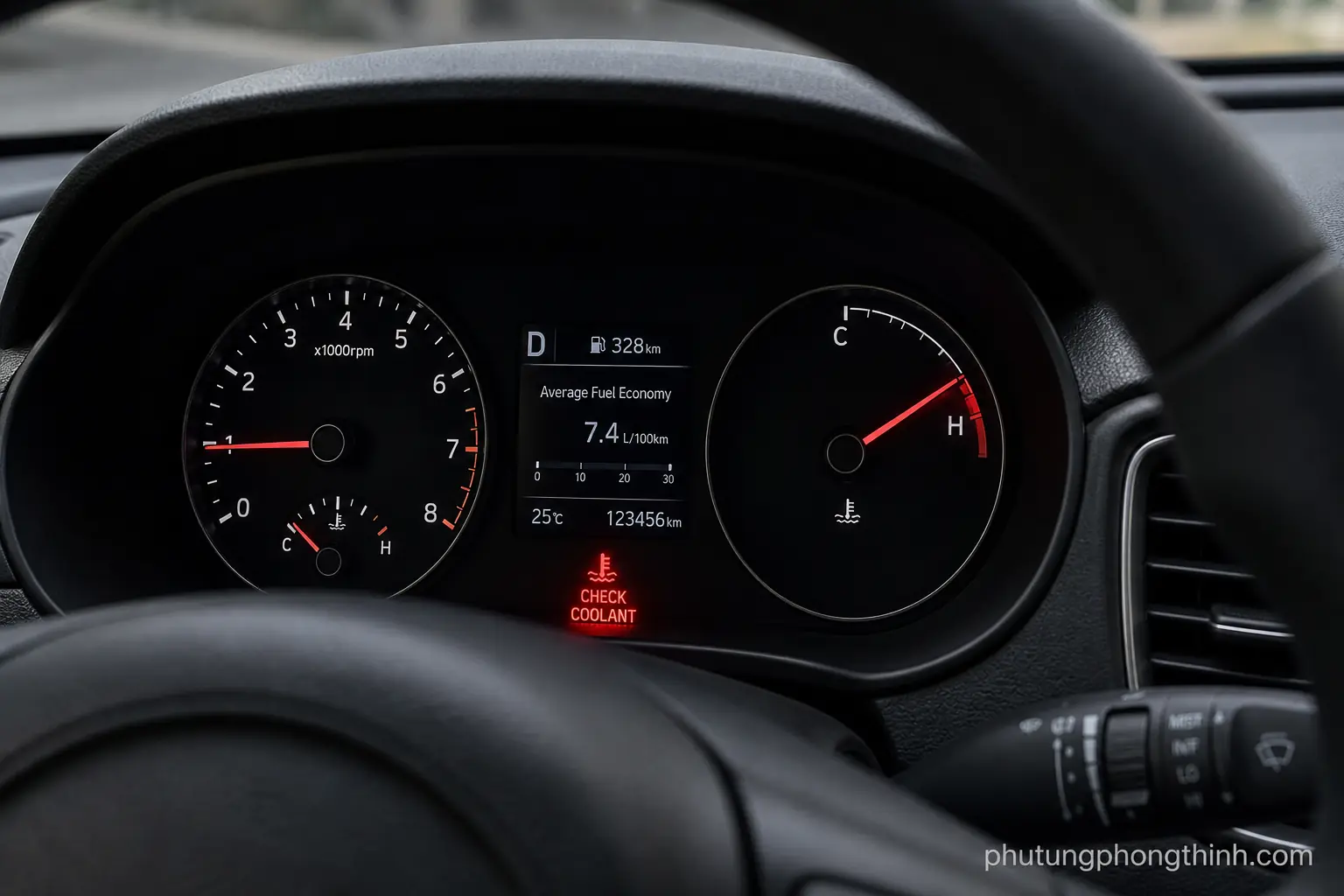
Car overheating but coolant full: what it usually means
If you have a car overheating but coolant full, the problem is usually not the amount of fluid in the system. A full coolant reservoir only tells you there is coolant present; it does not guarantee proper circulation, pressure, or heat removal. The fault may be in engine cooling, airflow, the radiator, the thermostat, the water pump, or even the engine sealing itself. Early clues often show up in the temperature gauge, a warning light, steam under the hood, or a heater that suddenly blows cold.
7 common causes to check first
Most overheating problems come from a mechanical or control issue somewhere in the coolant system rather than from low fluid alone. Start with the radiator, fan, thermostat, pump, and pressure parts, then work toward internal engine problems if the basics check out.
- Airflow problems at the radiator
- Cooling fan or fan control failure
- Stuck thermostat or restricted coolant flow
- Weak water pump or circulation issue
- Pressure loss from a bad radiator cap or hose leak
- Air pockets or trapped coolant after service
- Head gasket or combustion gas leak
1. Airflow problems at the radiator
Even with enough coolant, the engine can still overheat if the radiator cannot shed heat properly. Clogged fins, a blocked grille, or road debris can reduce low airflow and make heat buildup worse, especially at idle or in traffic. If the car overheats in stop-and-go driving, a radiator fan not working is often part of the same problem.
2. Cooling fan or fan control failure
Electric fans should come on when the engine gets hot, and if they do not, the temperature can climb quickly. A bad fan relay or a worn fan clutch can also prevent the system from moving enough air through the radiator. This kind of fault usually shows up more at idle than at highway speed, because road speed can temporarily provide its own airflow.

3. Stuck thermostat or restricted coolant flow
A thermostat that sticks closed can trap heat in the engine even when the coolant level looks normal. Common bad thermostat symptoms include fast temperature spikes, fluctuating readings, and a radiator that stays cooler than expected. Restricted radiator hoses can create a similar flow problem and keep hot coolant from moving through the system.
4. Weak water pump or circulation issue
The water pump is what keeps coolant moving through the engine, radiator, and heater core. If the impeller is worn, a belt is slipping, or the pump has an internal failure, circulation drops and the engine can overheat even with a full reservoir. In some cases, inconsistent cabin heat or a heater blows cold complaint points to the same circulation issue. For owners sorting out a broader drivetrain inspection, the fuel lift pump may also come up during under-vehicle checks on some models.
5. Pressure loss from a bad radiator cap or hose leak
Cooling systems rely on pressure to raise the boiling point of the coolant. A faulty radiator cap can let pressure escape too early, while cracked radiator hoses or a leaking coolant reservoir connection can cause the system to lose protection. If you are wondering how to test radiator cap condition, a pressure check is one of the fastest ways to confirm whether the system is holding what it should. Coolant loss with no leak can still happen if fluid is boiling off under load or escaping only when hot.
6. Air pockets or trapped coolant after service
After a coolant change, top-off, or repair, air pockets can get trapped inside the system and block circulation. Those pockets keep coolant from reaching key passages, so the engine may overheat even though the reservoir looks full. Bubbles in reservoir after warm-up can be a clue that air is still moving through the system instead of liquid alone.
7. Head gasket or combustion gas leak
If combustion gases are entering the cooling system, the engine can overheat hard even with coolant present. Watch for persistent bubbles in reservoir, milky oil, or coolant loss with no leak, because those are strong head gasket overheating signs. This is one of the more serious engine overheating diagnosis problems and usually needs professional testing.
Quick checks to diagnose the problem safely
Start with simple visual checks before you open anything or let the engine run too hot. Look at the temperature gauge, inspect the radiator hoses and coolant reservoir when the engine is cold, and watch for steam under the hood or wet spots around fittings. Belt damage and fan operation also matter because they can point to a circulation or airflow fault. If you have access to a cooling system pressure tester, it can help confirm leaks and pressure loss without guesswork.

- Check the temperature gauge behavior and warning light
- Inspect radiator hoses, the coolant reservoir, and nearby wet spots when cold
- Look for steam under the hood or coolant boiling over
- Confirm whether the cooling fan is operating
- Do not open the system hot
- Use a cooling system pressure tester if available
When to stop driving and get repairs
Stop driving immediately if the engine keeps overheating, you see heavy steam, or coolant is boiling over. Continuing to drive can turn a simple cooling system troubleshooting job into warped heads or gasket damage. If the cause is not obvious after your quick checks, get a professional diagnosis before the engine takes more heat damage. For some owners, especially during a repair visit, a transmission seal replacement may be handled at the same time as other maintenance.
Questions fréquentes
Why can a car overheat at idle but not at speed?
At idle, the engine depends heavily on the radiator fan and natural airflow. If the fan is weak, the relay is bad, or the radiator fins are blocked, heat builds up in traffic but may drop once the car starts moving and airflow improves.
Why can a car overheat at highway speed?
Overheating at highway speed often points to restricted coolant flow, a stuck thermostat, a weak water pump, or an internal engine issue. Because airflow is usually strong at speed, the problem is less likely to be just the fan.
Can coolant be full and still leak internally?
Yes. A system can look full in the reservoir while coolant is leaking into the engine, cylinders, or another internal path. Signs like coolant loss with no leak, milky oil, or persistent bubbles in the reservoir make an internal leak more likely.
What symptoms point most strongly to a bad thermostat?
Common bad thermostat symptoms include sudden temperature spikes, unstable gauge readings, and overheating soon after startup or under load. If the thermostat sticks closed, coolant flow is restricted even though the system appears full.
What symptoms point most strongly to a head gasket problem?
Strong signs include repeated overheating, combustion gases in the cooling system, bubbles in the reservoir, milky oil, and unexplained coolant loss. A head gasket issue usually needs professional testing and should not be ignored.